From KEDT:
Here’s a thought that might get your blood flowing: Thinking with your head and thinking with your heart can go hand-in-hand.
That’s because your blood pressure can have an impact on your brain health.
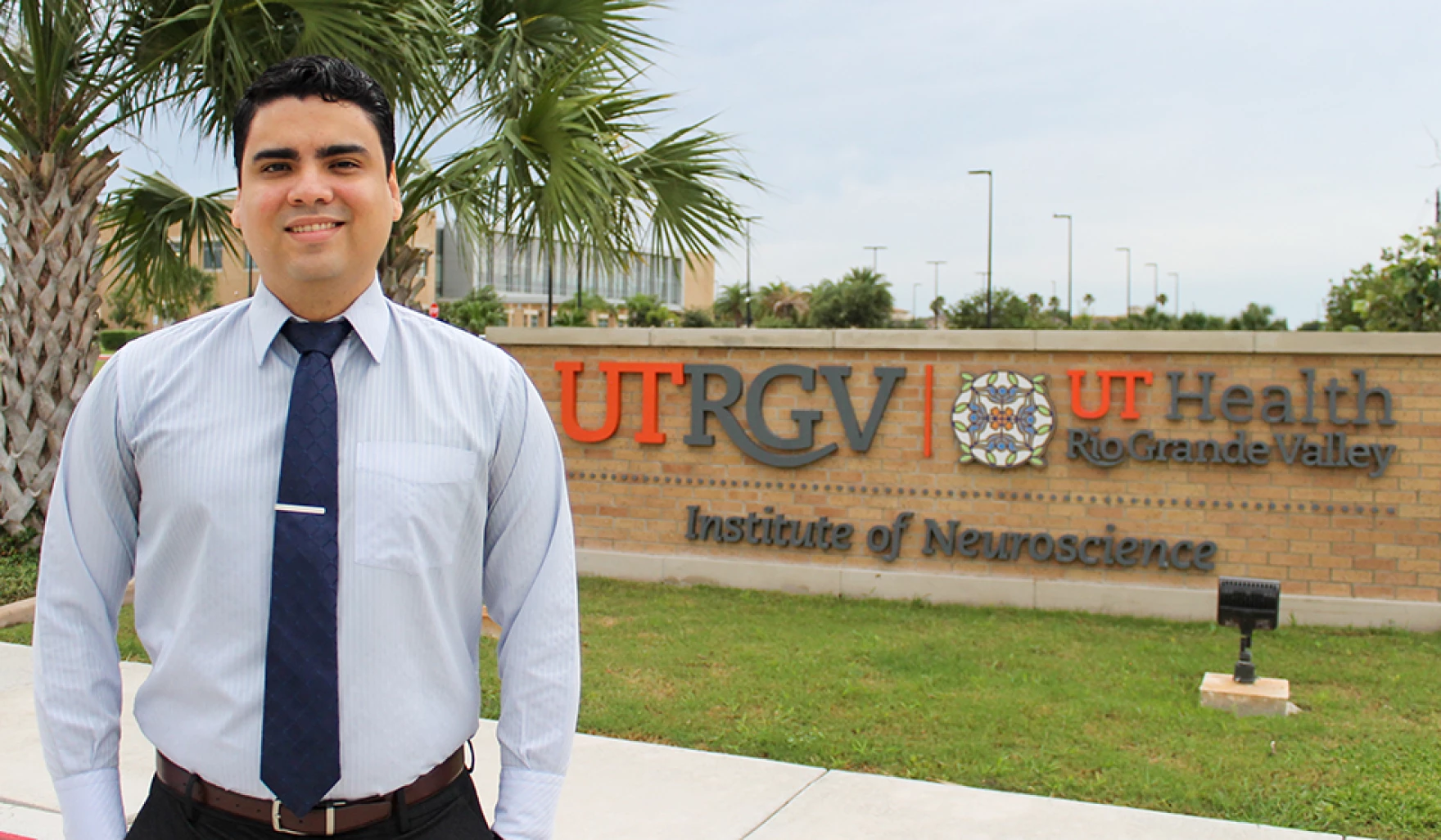
Dr. Jesús Melgarejo is a neuroscientist and professor at the University of Texas-Rio Grande Valley’s (UTRGV) School of Medicine. His research examines the connection between cardiovascular health and brain function.
“If we are able to have a better understanding of the connection between the two, then we are going to be able to make an impact by having better preventative strategy,” Melgarejo said.
He highlighted that controlling blood pressure is crucial in preventing cognitive impairment and dementia.
“What we have to emphasize is to keep controlling your blood pressure,” Melgarejo said. “That is making sure that your check your blood pressure, that if you are taking medication every you go to your doctor’s appointment, or to make sure that your blood pressure is on the control.”
Disruptions between the two can lead to impaired brain function and increased stroke risk. Research suggests it’s not only how high blood pressure rises that matters — it’s how much it fluctuates in a 24-hour period.
At a recent American Heart Association conference on hypertension, Melgarejo presented findings linking 24-hour blood pressure erraticism to cognitive decline. He said it can be used as a biomarker for individuals at higher risk.
“Blood pressure variability already identifies a potential marker cardiovascular health since the ‘90s,” he said. “The evidence that we are contributing other scientists as well in the recent decade is the impact of that blood pressure variability on brain health.”
Studies have shown that consistently elevated blood pressure increases the risk of cognitive impairment and dementia. Given the longevity, Melgarejo’s work breaks down blood pressure’s complexity — down to ebbs and flows of every few minutes.
Last year, the American Heart Association and the American College of Cardiology published their guidelines for the management of high blood pressure. The relevance and connection between heart and brain health is shown in the very first guideline.
“That’s the first guideline that is in their hypertension guidelines they are publishing,” Melgarejo said. “They are documenting the relevance, not only for the heart, but now for the brain. For the brain, we have known that for a stroke for many years, but for the brain to in terms of cognitive impairment and the match so that should be the priority.”
Melgarejo’s longtime mentor and fellow professor of neuroscience at UTRGV, Gladys Maestre, said the findings could lead scholars to better understand blood pressure’s connection with not only the brain, but other parts of the human body.