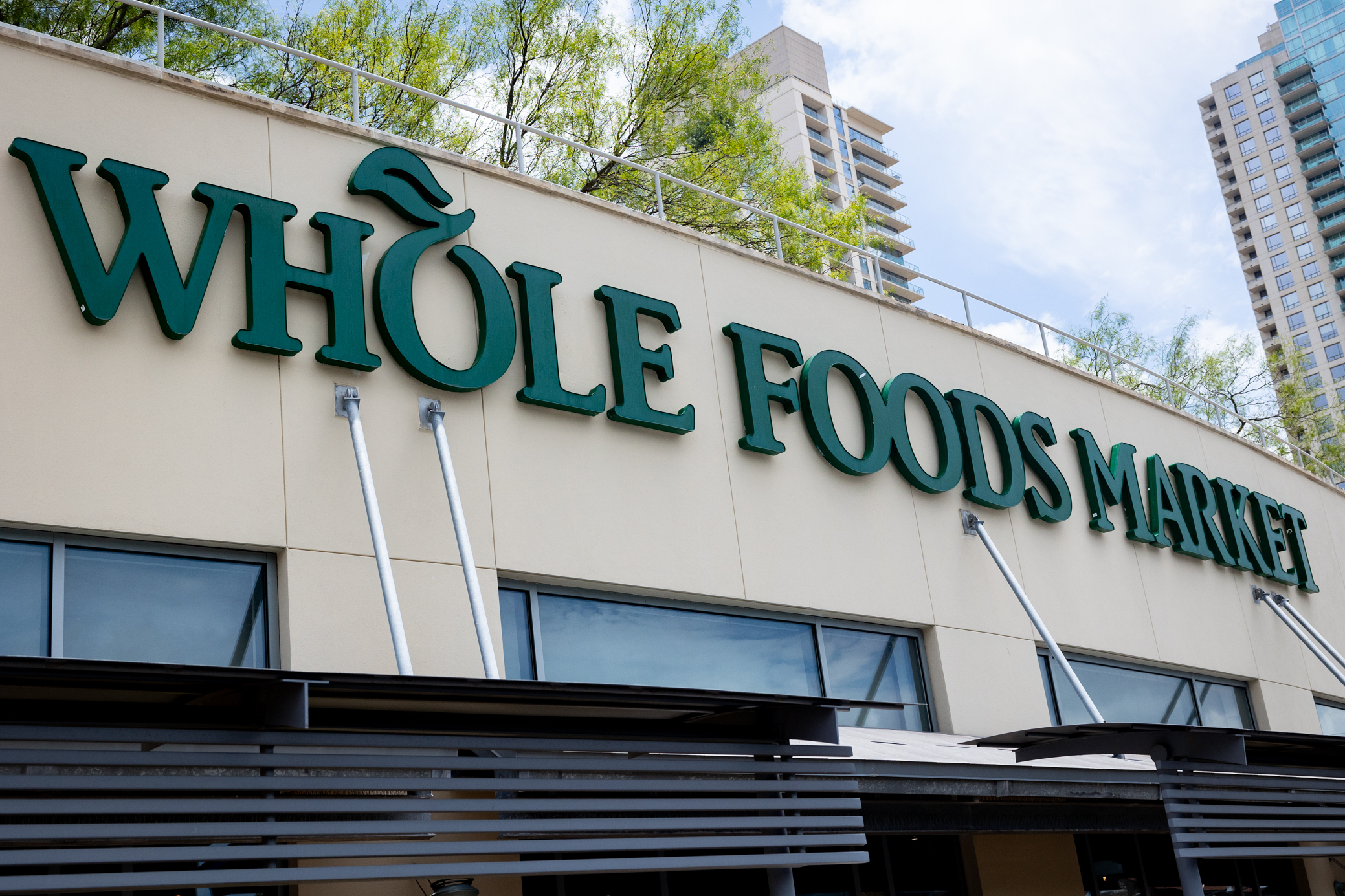
Whole Foods opened its doors in Austin back in 1980 and quickly gained a reputation as a place where you could get fresh foods, wellness products, and types of ethically sourced inventory.
The company blossomed into a global brand and in 2017 was acquired by Amazon for more than $13 billion in the hopes of expanding its presence in the grocery business.
But more than eight years after that deal was completed, little has changed.
According to one estimate, Amazon has less than a 4% market share in the grocery industry – and that’s why a Whole Foods near you could soon be undergoing some changes.
Owen Tucker-Smith has been following this for the Wall Street Journal and joined Texas Standard to discuss. Listen to the interview above or read the transcript below.
This transcript has been edited lightly for clarity:
Texas Standard: Alright, this is a hard word to say: the “Amazonification.” What are we talking about here? What’s changing in Whole Foods stores?
Owen Tucker-Smith: Yeah. So ever since January, Amazon grocery executives have been knee deep in this effort to bring their grocery brands closer to each other. And we’re seeing that as we’re trying to kind of combine the more Amazon Fresh/Amazon Go-type brands with Whole Foods.
That means trying to get Whole Foods customers to access products like Doritos or Pepsi or Tide Pods, which are products that really go against the initial ethos of what Whole Foods has already stood for. So we’re not at the point where we’re seeing Doritos on Whole Foods shelves yet, but they are coming up with creative sort of hybrid solutions here to try to make it easier for Whole Foods customers to get access to those kinds of goods.
So you might see a Whole Foods on the second floor and an Amazon grocery kiosk in the first floor where they’re selling Oreos and Cheetos. Or you might have a room in the back of a Whole Foods that has kind of secret storage of some of these products so that if you’re out at Whole Foods, you can order them on your phone.
So there’s this delicate dance going on where they really wanna try to help Whole Foods customers get the products that many of them really, in the back of their mind, do want. But they have to be careful because this is a really special, longstanding brand that a lot of people are very loyal to.
And a lot these customers are pretty picky. So they have they have make sure to do this in the right way.
So, I mean, it sounds like there’s this tension sort of happening at the corporate level. What about at the stores themselves? Has there been friction there among customers and among these sort of frontline employees trying to do their jobs?
Yeah, I mean, I think we’re kind of in the early stages here. So this is a pilot rolling out in a few cities. And it’s going to come to some more soon in different ways from the message we’re getting from the company.
But this is affecting store-level workers. There’s this program going on called Project Fusion, where they’re trying to make it easier for customers to get delivery of both Whole Foods and Amazon grocery products together. And so that means that more Whole Foods employees are to start fulfilling the Whole Foods portions of these orders from customers who are ordering on amazon.com.
So it increases the e-commerce workload of some of these employees. And many employees I spoke to, current and former, at the store level, it just gives them a little bit of pause. When they see some of the changes happening at the corporate level and hear some of those messages from the senior leadership level, it has disgruntled some of them.
» GET MORE NEWS FROM AROUND THE STATE: Sign up for Texas Standard’s weekly newsletters
Now, on top of this, Whole Foods recently announced a round of layoffs. Is this affecting people in stores or who did this affect and why did the layoffs happen?
This is, as far as we know, on the corporate level. And so Amazon is in this aggressive cost-cutting effort and it’s trimmed about 10% of its corporate workforce in an effort to cut costs. And this did affect the Worldwide Grocery Stores part of the business, which includes Whole Foods.
And so Jason Buechel, who is the CEO of Whole Foods, he was promoted to run all of the grocery operations, not just Whole Foods, earlier this year. And he’s been in this effort to kind of consolidate the Whole Foods side of grocery and the Doritos and Tide Pods side of grocery into one kind of nebulous thing.
And so as he’s done that, they want to make it more innovative, they want to make it faster, they want it to make less bureaucratic. A memo went out to employees kind of informing them that as a result of this kind of restructuring, they would have to make some cuts. And so these are these are cuts that have been sort of long-awaited in the broader Amazon sphere.
But it wasn’t always clear what was going to happen to the Whole Foods employees. And those Whole Foods corporate staffers are becoming Amazon employees in the coming months. So overall, it’s been sort a tense time in Whole Foods’, Austin, Texas headquarters.
So Amazon seems to be making this bet that in an effort to really increase that 4% of the grocery market share, that it’s worth maybe scaring off some Whole Foods purists. Does that feel right or does it feel like they haven’t fully gone there yet and they’re experimenting with how far they can push them?
When I talk to folks, the question seems to be, “how many customers do you lose when you do something like that and how many do you gain?” And it’s never quite clear.
And to be honest, this has been a question that Whole Foods has wrestled with from its beginning: If you’re gonna base your whole brand around your standards, when are you limiting yourselves? And what kinds of risks can you take?
So in the very early days, John Mackey, the founder, had to make the decision of, are we going to have meat? And there were days where they didn’t want to have sugar. And obviously like they make concession after concession. And now you can see in these stores, they might not have Cheez-Its, but they have Cheddar Square Crackers. And these are products that still fulfill their strict ingredient standards.
But they do have to make little compromise after little compromise to appeal to more people. And so it’s this balancing act of trying to broaden your horizons and get more people to come in your store without kind of ruining the brand identity.
And I think some of these latest developments, some former and current employees kind of wonder when do you push it too far to the point where you dilute the brand so much that it loses some of its meaning? And that is some of the fear that people in the kind of broader Whole Foods universe have right now.
There are others, of course, who think Amazon bought this brand eight years ago and they don’t have much to show for it. And if they really want to be a big player in grocery, you’re going to have to take some risks like this and you’re gonna have to take some big swings.