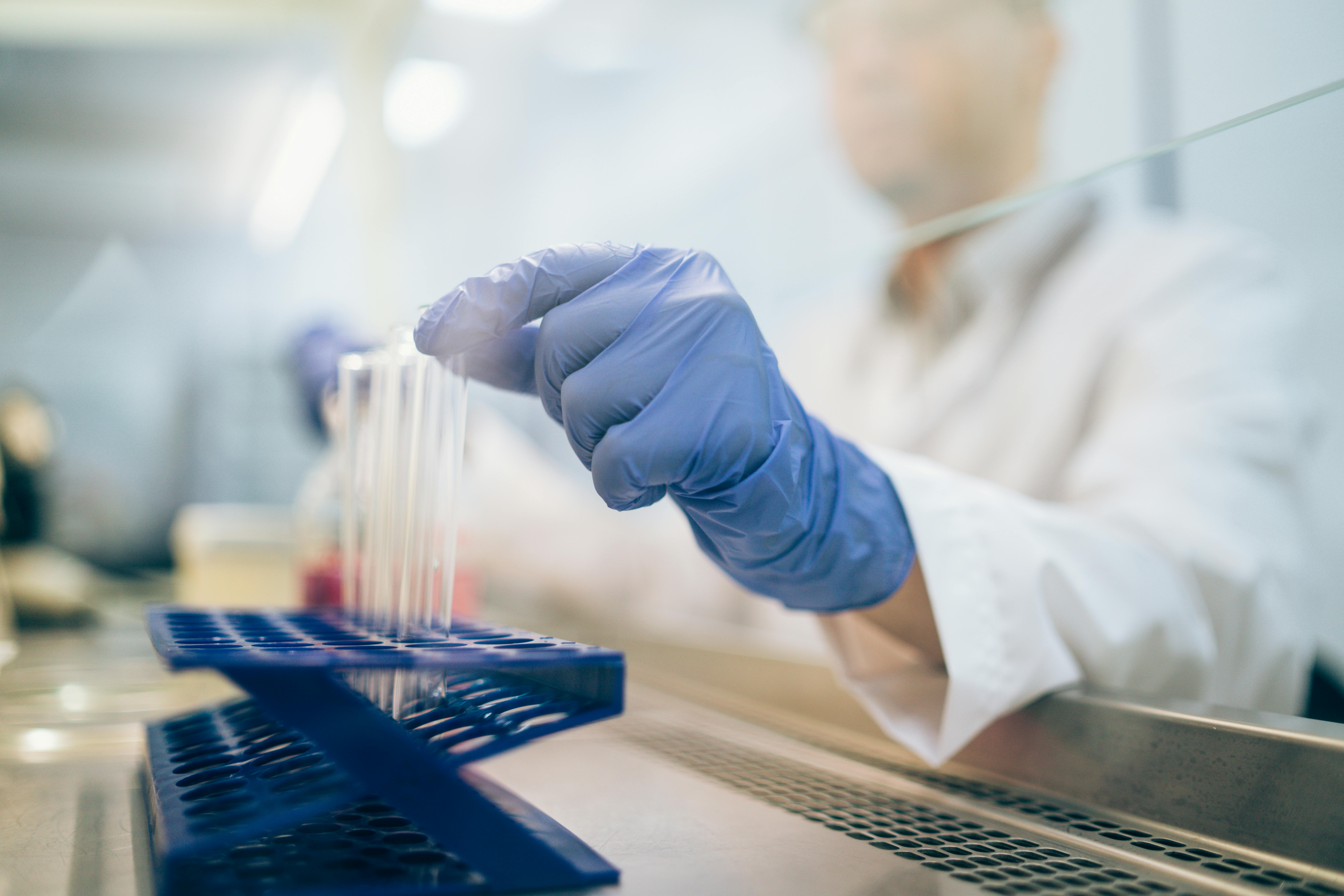
Your medicine could one day be made in space. Yes, you read that right.
Scientists believe that certain drugs can be most efficiently produced beyond our planet. Now, Houston-based Intuitive Machines is partnering with San Jacinto College to train Texans for future careers in the field of space biopharmaceuticals.
What does it all mean?
“Space biopharma and space biomanufacturing is the idea that you can manufacture common pharmaceuticals in a microgravity environment,” Robyn Cardwell, senior director for strategic partnerships and growth at San Jacinto College, told Texas Standard.
A number of experiments already conducted on the International Space Station have shown promising results for the future production of medicines in low Earth orbit, Cardwell said. Many of these medicines promise better results than those produced on Earth due to the conditions of production in space.
“The forces on either the biologicals or the chemistry that’s happening are different than here on Earth. So you can get some different properties. Whether they’re better, whether they’re more efficient, remains to be seen,” Cardwell said.
» GET MORE NEWS FROM AROUND THE STATE: Sign up for Texas Standard’s weekly newsletters
San Jacinto College’s new project with Intuitive Machines builds on an existing workforce development partnership. The two already work together to support a biomanufacturing program at the college, a partnership they will now expand into aerospace.
“We are going to be able to provide a trained workforce in biomanufacturing, specifically for these pharmaceuticals produced in orbit,” Cardwell said.
Although the industry barely exists at the moment, training the workforce for future careers in space manufacturing is critical for the industry, she added. San Jacinto students will primarily be trained in processing Intuitive’s space biopharmaceuticals once they return to Earth.
The project is supported by state investment in the space industry, specifically a Texas Space Commission grant Intuitive Machines received earlier this year to support the development of its spacecraft for biomanufacturing.
“It’s a very exciting opportunity to show where the aerospace industry [and] the biomanufacturing industry, especially here in Houston and in Texas, can really work together to develop the workforce and to look at the commercial viability of what seems to be an out-of-this-world or crazy idea, but is very possible in the future,” Cardwell said.