‘Space for collaboration’: Contemporary Arts Museum Houston taps co-director model

Melissa McDonnell Luján and Ryan N. Dennis look to bring innovative approach to expand beyond the walls of the institution.

By Laura RiceJuly 22, 2025 11:05 am, ,

A Texas museum has started doing things a little differently. The hope is that will translate to more community engagement and higher attendance.

The change has to do with its leadership. Instead of appointing a new executive director when its prior one wrapped up service at the end of last year, Contemporary Arts Museum Houston appointed two. That’s right, co-directors leading the way.

As part of Texas Standards’ ongoing series, the Texas Museum Map, we decided to check in with the two – Ryan N. Dennis and Melissa McDonnell Luján. Listen to the interview above or read the transcript below.

This transcript has been edited lightly for clarity:

Texas Standard: I understand in 2023, you both came to Contemporary Arts Museum Houston, or CAMH, with lots of experience in the arts world. But how much did you know one another, or had you worked together before this appointment? Melissa, why don’t you start?

Melissa McDonnel Luján: Ryan and I met each other about 10 years ago. I was working at The Menil Collection at the time and she was working out Project Row Houses.

So we’ve known each other quite some time through really formative work that we were doing in Houston.

Ryan, tell us what you each bring to this co-directorship. You share that role, but you also have your own ideas and areas of expertise.

Ryan N. Dennis: Yeah, definitely. I mean, I think Melissa brings her expertise in architecture and strategic planning and museum expansion.

Me, you know, I’ve worked in Houston and outside of Houston and really thought a lot about community engagement by way of exhibitions and the ways in which curatorial work and education and kind of collapsing these silos, if you will, within institutions. And then thinking, you know, really broadly about the ways in which this impacts the museums to build new audiences.

And I think, you now, this is why our previous director kind of courted us and hired us in 2023. The museum, CAMH, was really interested in expanding beyond the walls of institution and really thinking about it’s growth and its footprint right within the museum district and this kind of long-term expansion at a period of time when obviously there’s a lot happening in a national kind of administration, but there’s also a lot of happening locally and how to, in some ways, be observant and responsive to the needs of, say, a Houston community but also have the great privilege to bring our skill sets together to really think expansively about the next, say, 10, 20 years at the CAMH.
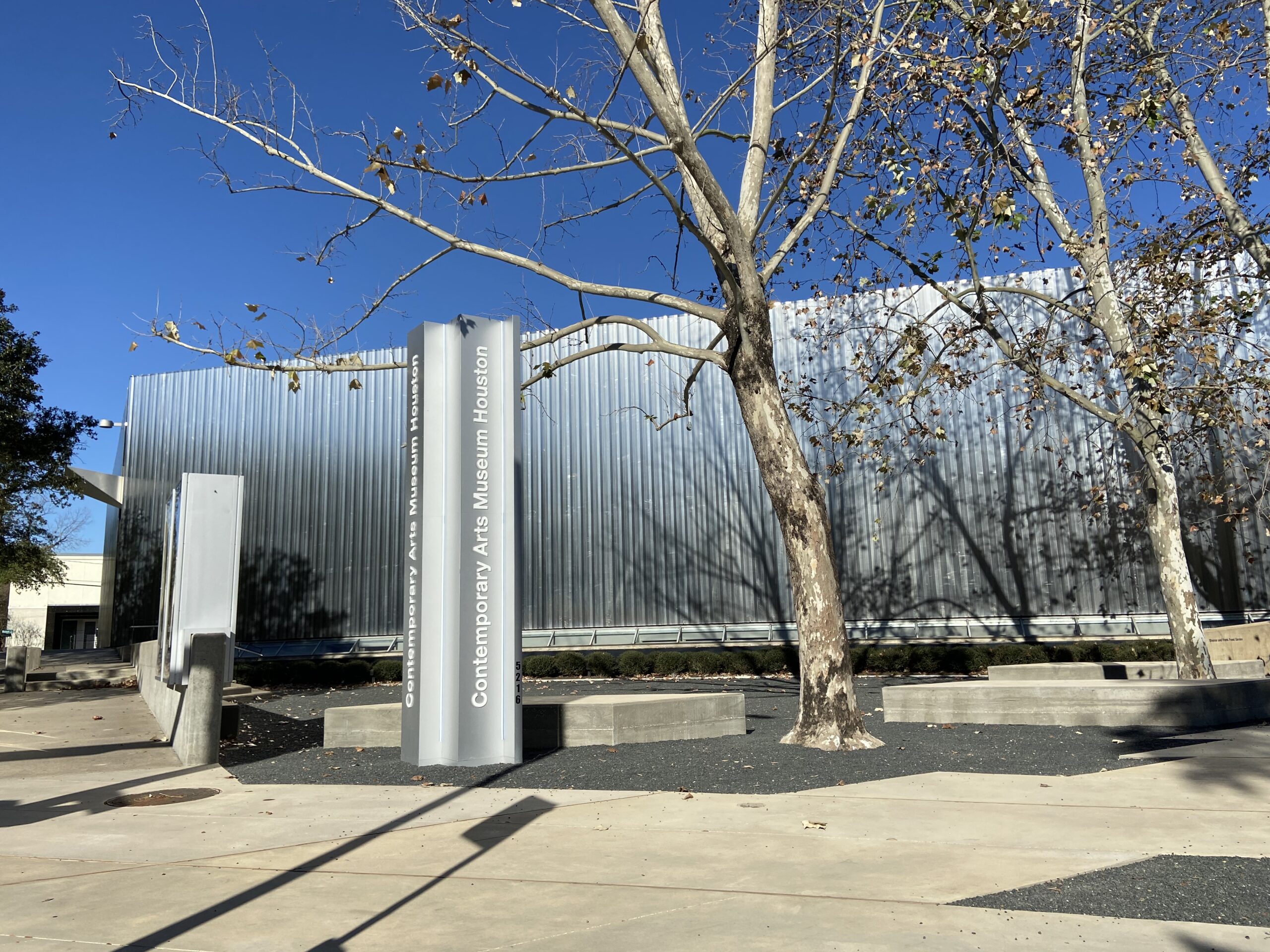

WhisperToMe, CC0, via Wikimedia Commons

The Contemporary Arts Museum Houston

So Melissa, why is it important that you share this co-director title?

Melissa McDonnel Luján: There are models of co-directors in many disciplines, right? We look at co-founders as really a basis, you know, two people that work together. And we certainly see that with our colleagues in performing arts.

And it’s not been something that’s been tapped, we think, enough in museums, but it’s a real opportunity that really addresses some big questions that museums are grappling with.

One is that a single person is both an expert, both curatorially, with finances, with the facilities, with education and fundraising – like that’s a really tall ask of one individual. And the realities are that Ryan and I are both working mothers of two children, two young children, and so we also see the need to balance our own personal lives.

And so the co-directorship really allows us to share that load a bit, which has kind of traditionally been, you know, pin-loaded, I guess, on one single person. So that felt right for us.

The other quality that comes with co-leadership is a kind of consensus-building model. That, you know, a single person being the answer to every question isn’t something that really, I think, works in today’s business. And I think that that kind of consensus-building really, we hope, radiates to our teams, that it requires discussion and assurance, that we have the buy-in of each other before we make a major decision.

And our hope is that that is seen within our senior leadership team and at every kind of level within the museum.

» GET MORE NEWS FROM AROUND THE STATE: Sign up for Texas Standard’s weekly newsletters

Ryan, how do you do you the co-leadership and how innovative is this in the scheme of things?

Ryan N. Dennis: And I think, even in terms of like a cultural ethos within the institution, I think it signals this kind of space for collaboration and for us to allow for more agency for individual team members to work more collaboratively internally, thus radiating externally.

I think a large part of what I’m observing right from my friends and peers and other colleagues who are new directors is that they’re actually burnt out within a three- to six-month period. And the reality is, is like, that’s also not sustainable for the kind of institution-building that we want to see in perpetuity.

And so, I think if there’s a place that can kind of lean into this inquiry, I think that the Contemporary Arts Museum is a place to do that in Houston, right? We are small-ish. We’re nimble enough. We’ve had experience where there has been one singular director over its 76-year history, and now we’re leaning into something new for this institution and for other museums specifically.

I mean, again, there are models of co-directorship that happen in different kind of fields. I also think, in conversation with colleagues and peers, it feels really lonely at the top. And the reality is, it’s like, Melissa and I can have really great conversations, hard conversations, laughter and conversation, tearing conversation, through some of the hardships that we’re kind of working through, but also celebrate each other when we have successes along the way.

So it just feels like, especially right now in 2025, it feels like let’s just try new things and see how these approaches work and edit, finesse and shift when we need to. And right now, I mean, I think the CAMH has been in a position to open itself up to the shift and we are leaning right in.

So what do you have planned, Melissa?

Melissa McDonnel Luján: So, I mean, as Ryan shared, moving beyond the walls is a really critical move that’s been kind of set in place for years at CAMH. And we have a tremendous partnership in Houston Freedmen’s Town with the Houston Freedmen’s Town Conservancy.

We’ll continue to have very vibrant exhibitions in our museum. And, you know, we’re really looking to position CAMH for future growth. We acquired some additional land a couple years ago, and we’re really wanting to look strategically about how CAMH moves forward.

We are in a building that’s 56 years old, and how we organize the museum around ensuring more resiliency and really build and create additional space, people space, green space and social space… Those are all things that we’re pretty focused on.

If you found the reporting above valuable, please consider making a donation to support it here. Your gift helps pay for everything you find on texasstandard.org and KUT.org. Thanks for donating today.