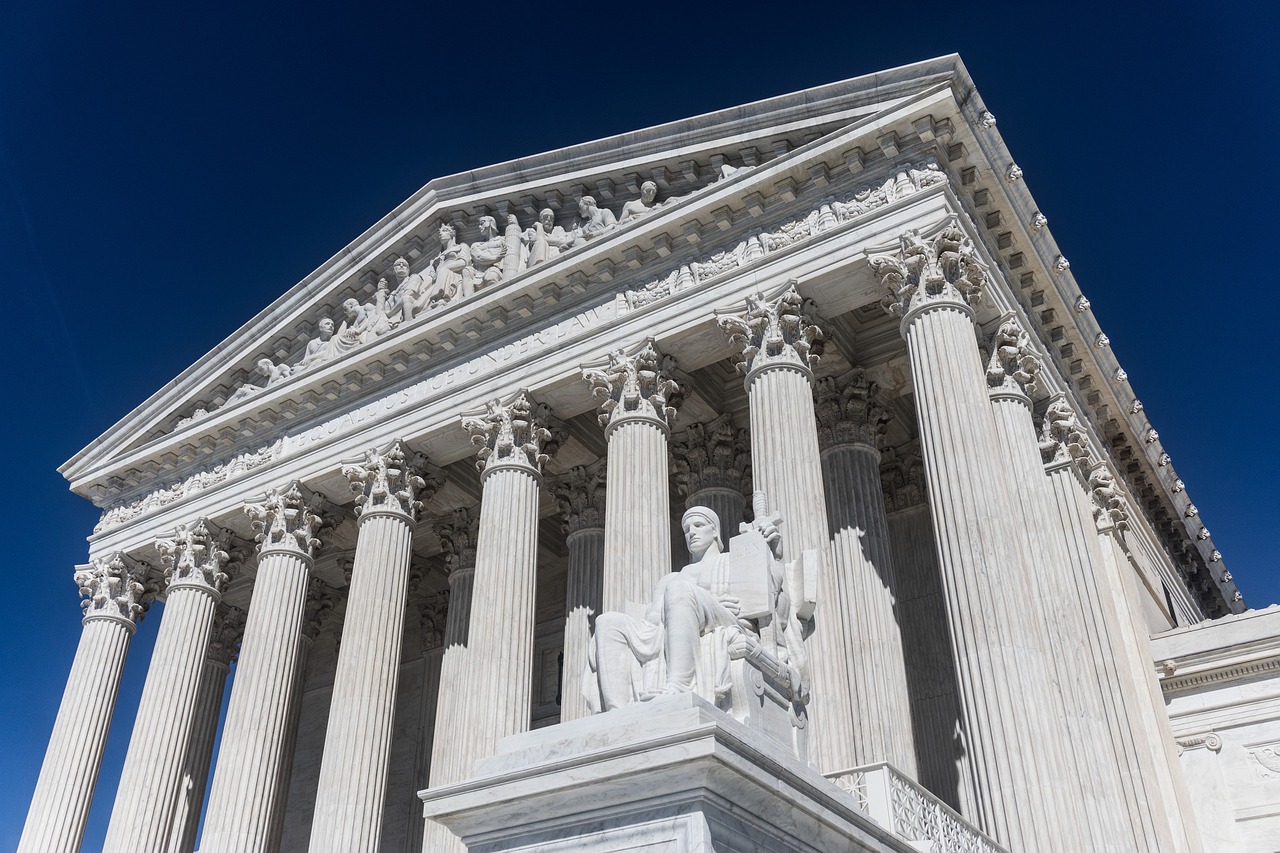
The U.S. Supreme Court heard a case Wednesday about the legality of President Donald Trump’s tariffs.
The measures are being challenged by a number of small businesses and a group of states, which argue that Trump does not have the authority to impose tariffs without permission from Congress.
Seth Chandler, professor at the University of Houston Law Center, said the stakes in this case include billions of dollars and U.S. relations with longtime allies and trading partners.
But beyond that, there are two main reasons Texans should be watching the outcome of this case.
“There’s an immediate pocketbook reason, which is that these tariffs have already, in their brief lifetime, collected over $80 billion, and some segment of that is coming from Texans,” he said. “There’s a dispute about how much of that gets passed on back to the exporters, but certainly I think everyone would agree that a decent chunk of those tariffs are paid by average Americans.”
The second reason, Chandler said, has to do with presidential power.
“The president has taken a fairly aggressive position about his powers under an emergency act,” Chandler said. “And so since the president has fairly broad power to declare emergencies in various fields, a ruling favorable to him in this case could embolden the president to take further emergency actions that may have other effects on Texans.”
» GET MORE NEWS FROM AROUND THE STATE: Sign up for Texas Standard’s weekly newsletters
This case — and criticisms of the tariffs — stem from the fact that Congress was not involved in these tariffs, and the Constitution says Congress is supposed to control the purse strings.
“What makes this case difficult is that President Trump has used a statute that hasn’t been used in this way by other presidents and that doesn’t explicitly authorize him to impose tariffs,” Chandler said. “And not just little mini tariffs, but really very high tariffs on trading partners of the United States.”
Chandler said he felt both sides had an uphill battle during the justices’ questioning Wednesday.
“President Trump’s attorney had the problem of explaining how it is that something that has collected $80 billion isn’t actually a tax,” he said. “And the attorneys opposing the president had the burden of explaining how it is that the statute on which President Trump relies actually permits him to do even more drastic things… And so I think both sides confronted the fact that this is not a straightforward case.”
Chandler said that while the court often saves big decisions for the end of the term in June, he expects we could see a ruling in this case before then.
“In some sense, this case is not that complicated. There are just a few lines of a statute to interpret, and yes, there are a half dozen precedents to call on, but in many ways that’s actually a simpler case than is usually before the Supreme Court,” he said. “It’s just that the case is really important. And so to me, I would not be surprised to see a decision well before June.”