Growing cotton can be a tough way to make a living in 2025.
Global demand has waned for several years, thanks in part to the rise of synthetic fibers. At the same time, high prices for supplies like fuel and fertilizer cut into farmers’ bottom line.
Researchers have long looked for a way to get more revenue out of the crop.
“Right now most of [cotton farmers’] income comes from selling the fiber,” said Keerti Rathore, a professor of soil and crop sciences at Texas A&M University who specializes in genetic modification. “But if you make the seed valuable in terms of being able to utilize that for food, and also feed for other animals, maybe they’ll get more value for their seed.”
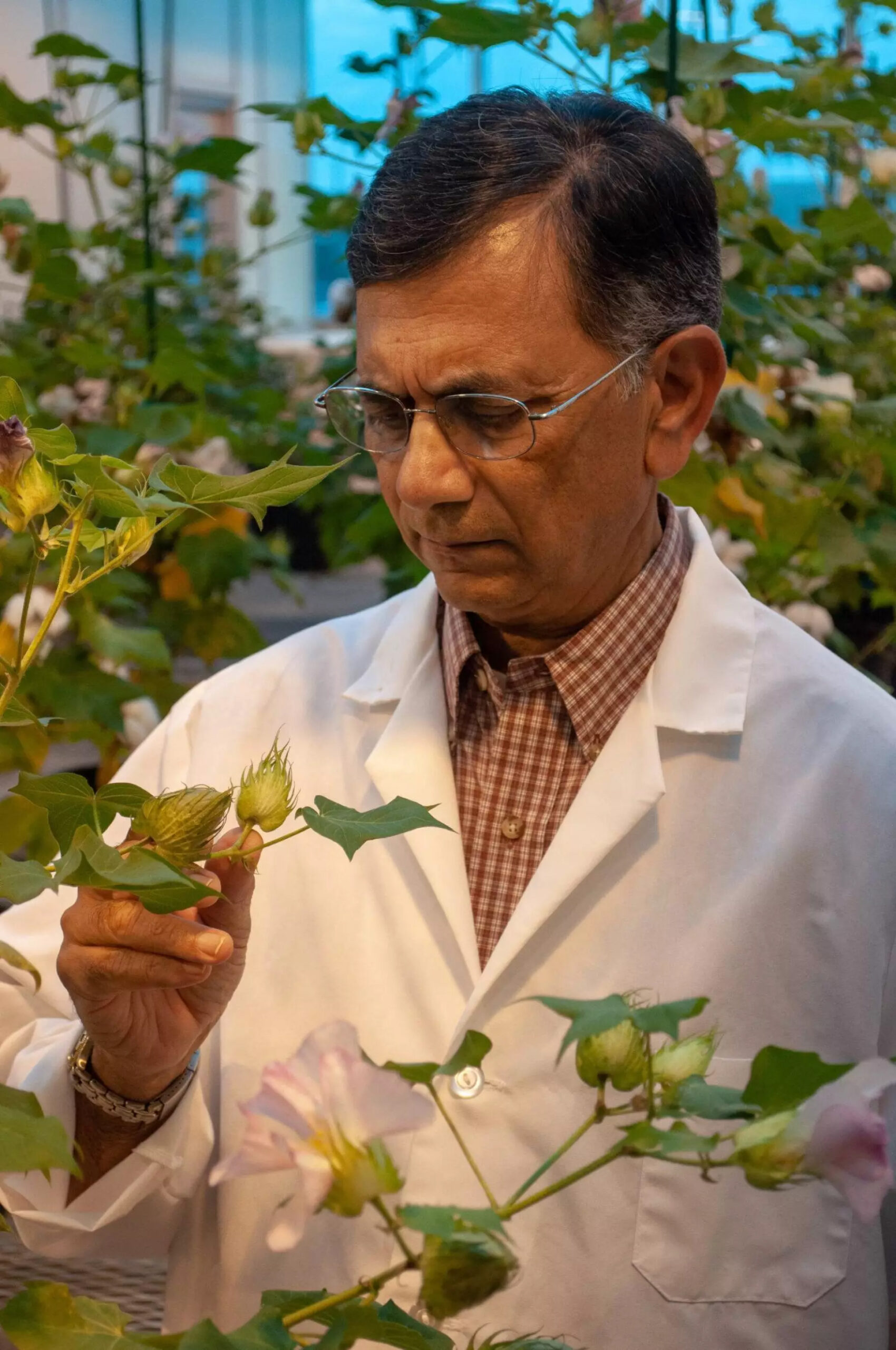
Professor Keerti Rathore has spent the past 30 years working to produce cottonseeds with less toxin. If ground into flour, the protein-packed seeds could provide food for millions of people. Lacy Roberts / Texas A&M University
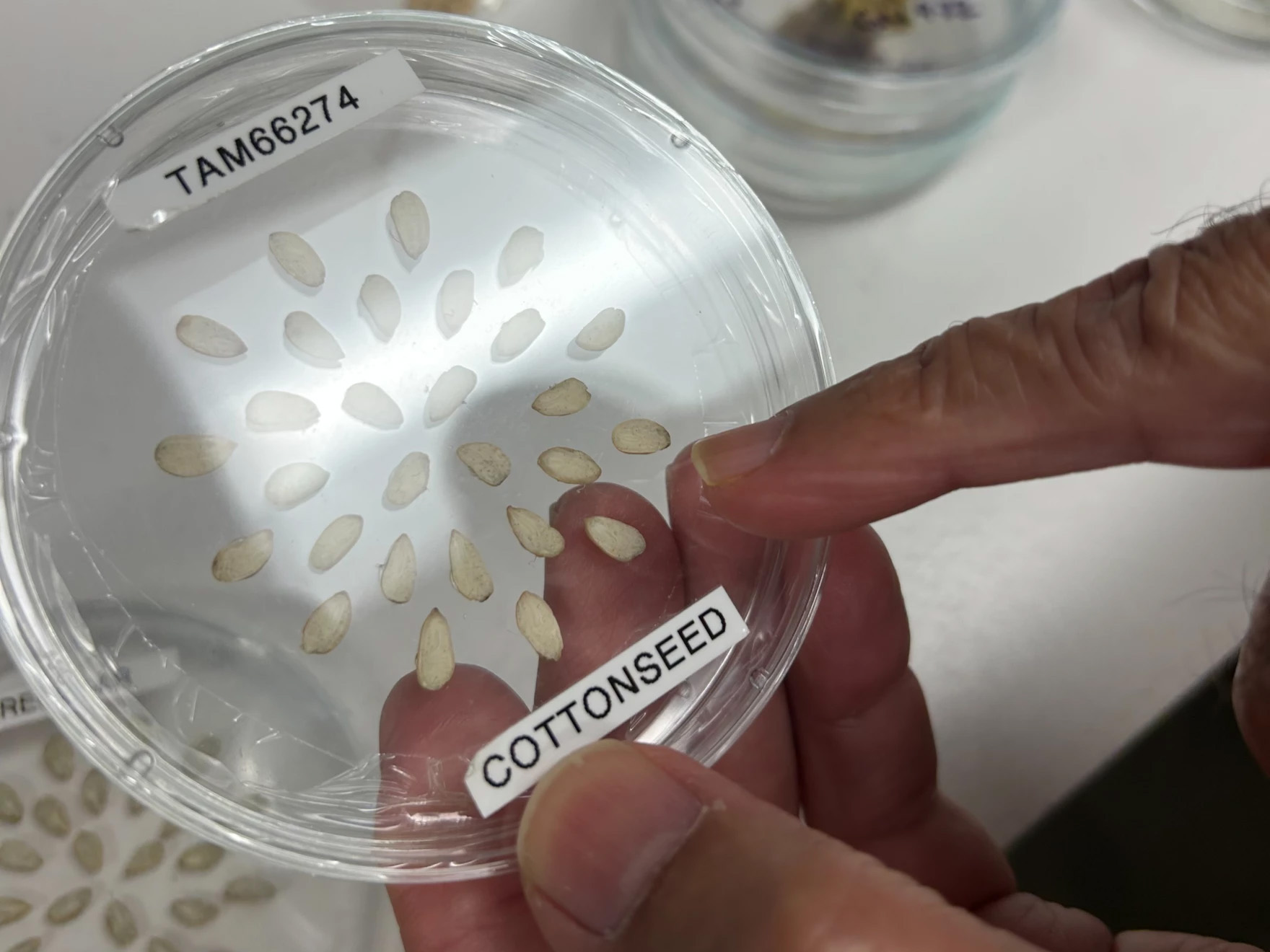
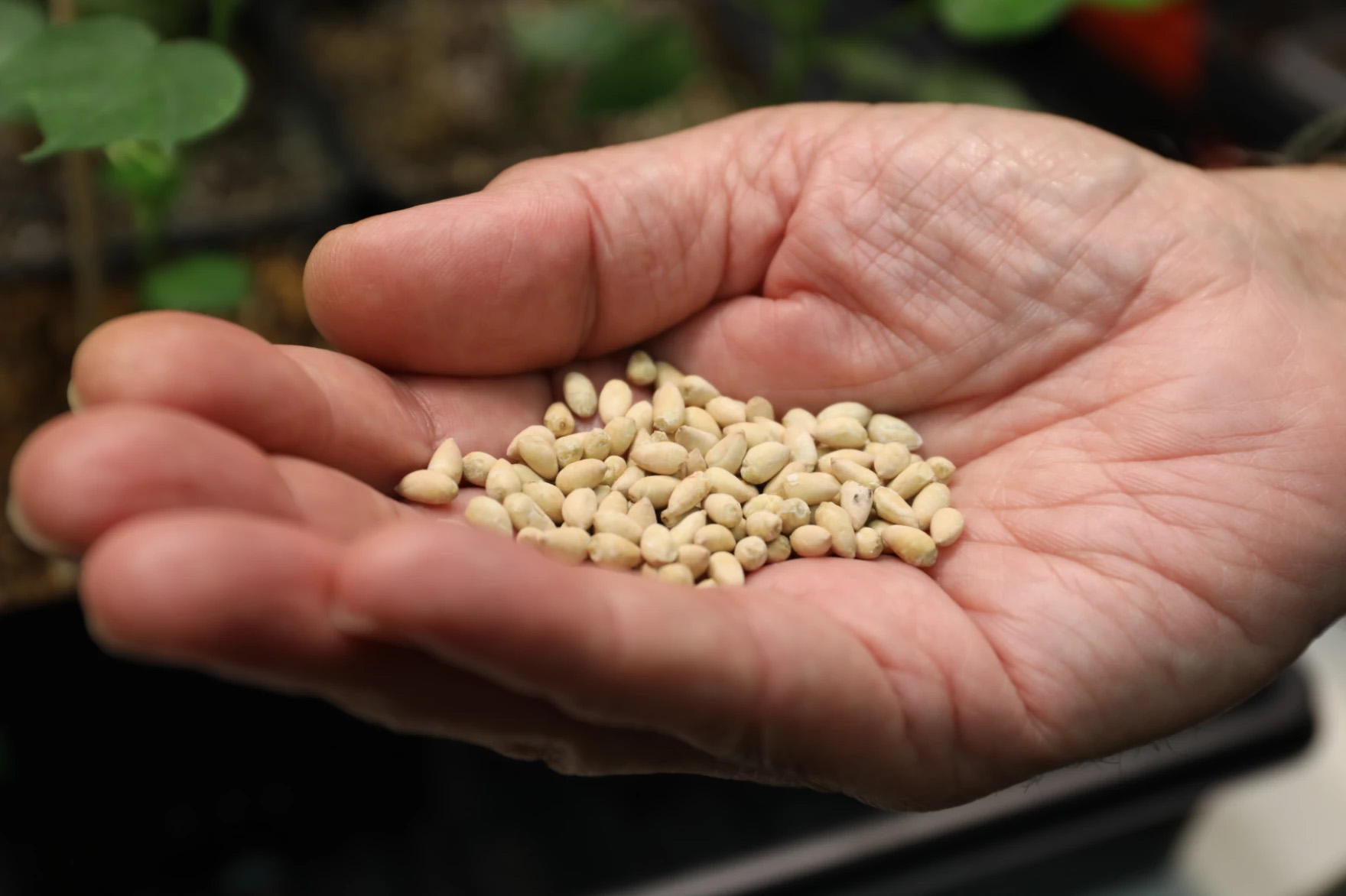
For every pound of cotton fiber produced, there are 1.5 pounds of seed. But the seed’s uses are limited by a toxin called gossypol, which makes it inedible for most animals, although cattle are an exception.
“The cotton industry has always been incredibly excited about the potential of getting rid of gossypol and what that will do for the value [of cottonseed],” said Tom Wedegaertner, a veteran of the cotton industry.
Wedegaertner, retired three years ago from Cotton Inc., a grower-supported research and marketing group which funded research by Texas A&M’s Rathore.
Gossypol appears as little black dots on the cotton plant. Rathore’s goal was to make those dots disappear – a target he worked toward for 30 years.
“Most other scientists would have moved on to something else,” Rathore said. “I guess it’s probably a little stubbornness on my part.”
A lot of protein
Cottonseeds are about 23% protein. Globally, farmers produce roughly 45 million tons of them annually.
“If you could utilize that protein directly for human nutrition, you could meet the basic protein requirements of 500 million people. That’s a lot of protein,” Rathore said.
He envisions the seeds will be used more for livestock than for humans. Wedegaertner, from Cotton Inc., said they show particular promise for poultry and aquaculture.
“The critters, especially the shrimp and the black sea bass, all those guys just seem to greatly prefer [cottonseed] to a pellet that had soybean protein,” Wedegaertner said.
But cotton plants need the gossypol toxin to help them resist pests and diseases. Rathore’s challenge is to lower gossypol levels in the seed so it can be eaten, without disrupting the toxin in other parts of the plant – an obstacle that previous efforts to make the plant useful couldn’t quite clear.
In the late 1950s a scientist named Scott McMichael published research on Hopi cotton – so named for the Native Americans who cultivated it. It’s also called glandless cotton, because it doesn’t have the glands that produce gossypol, making it edible.
Researchers thought they had the key to turn cottonseed into a major food product. They worked for decades to do so.
“We had edible nuts and flavored salad toppings and cookies and crackers. Oh gosh, we made all kinds of stuff out of it,” Wedegaertner said.
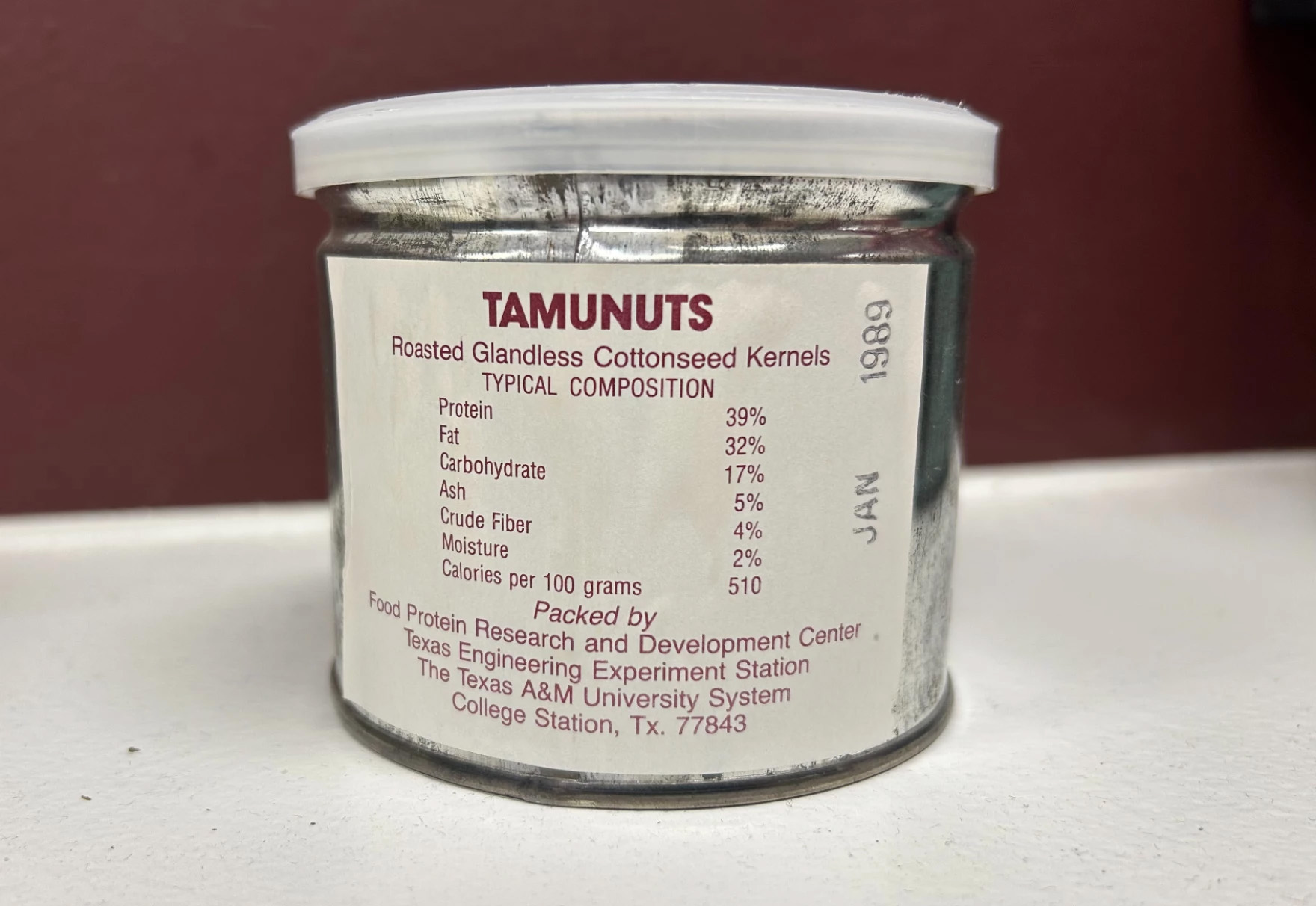
Food scientists at Texas A&M University in the 1980s created TAMUNUTS: roasted and salted edible cottonseeds. The glandless Hopi cotton inspired optimism up and down the plant’s supply chain.