Editor’s note: The City of Corpus Christi released a statement addressing some of the reporting in this article. You can read this statement here.
From Inside Climate News:
CORPUS CHRISTI, Texas—The imminent depletion of water supplies in Corpus Christi threatens to cut off the flow of jet fuel to Texas airports and other oil exports from one of the nation’s largest petroleum ports, triggering potential shockwaves through energy markets in Texas and beyond.
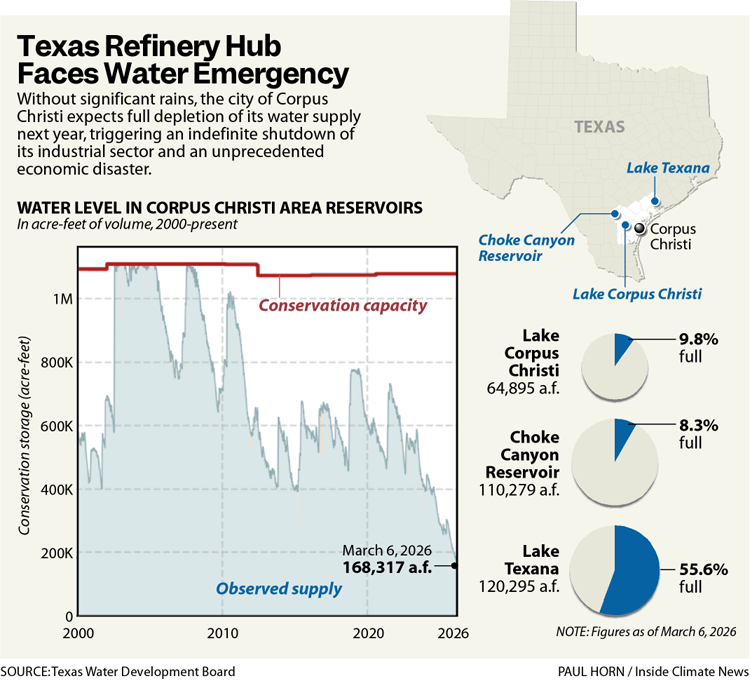
Without significant rainfall, Corpus Christi is headed for a “water emergency” within months and total depletion of the system next year, according to the city’s website.
“The impacts are going to be felt tremendously through the state, if not internationally,” said Sean Strawbridge, former CEO of the Port of Corpus Christi Authority, the nation’s top port for crude oil exports, in a 40-minute interview Thursday. “This should be no surprise to anybody. We were talking about this over a decade ago.”
Other current and former officials, alarmed at what they call a lack of preparations, have suggested the potential for an economic crisis involving mass layoffs, disruption of fuel supplies and billions of dollars in emergency spending to avoid an evacuation of the city.
Strawbridge, who now lives in Houston, laid the blame on city leaders, citing “their lack of experience, their lack of knowledge, their lack of recognizing the risks” in a bumbling, decade-long endeavor to build a large seawater desalination plant that would veer the region off its clear course towards calamity.
“They’ve found themselves in quite a dire predicament as a result of those poor decisions,” Strawbridge said. “Time is up.”
A spokesperson for Corpus Christi Mayor Paulette Guajardo declined interview requests, citing “prior commitments,” and did not respond to follow-up questions. City manager Peter Zanoni also did not respond to questions. Instead, Corpus Christi public information manager Robert Gonzales provided an emailed statement.
“The water shortage in the Coastal Bend is the result of a historic five-year drought,” it said. “Currently, the City of Corpus Christi has $1 billion in City Council-approved and funded water projects underway to address our water needs. The City remains committed to ensuring water security for the more than 500,000 residents and our commercial and industrial customers.”
In an emailed statement on Monday, Gonzales called the story “an incomplete and alarmist narrative.”
Depletion of this region’s reservoirs would lead to “controlled depression” for the local economy, “mass unemployment” and “industrial total shutdown,” according to a two-page report by Don Roach, former assistant general manager of the San Patricio Municipal Water District, which supplies many of the region’s large industrial water users.
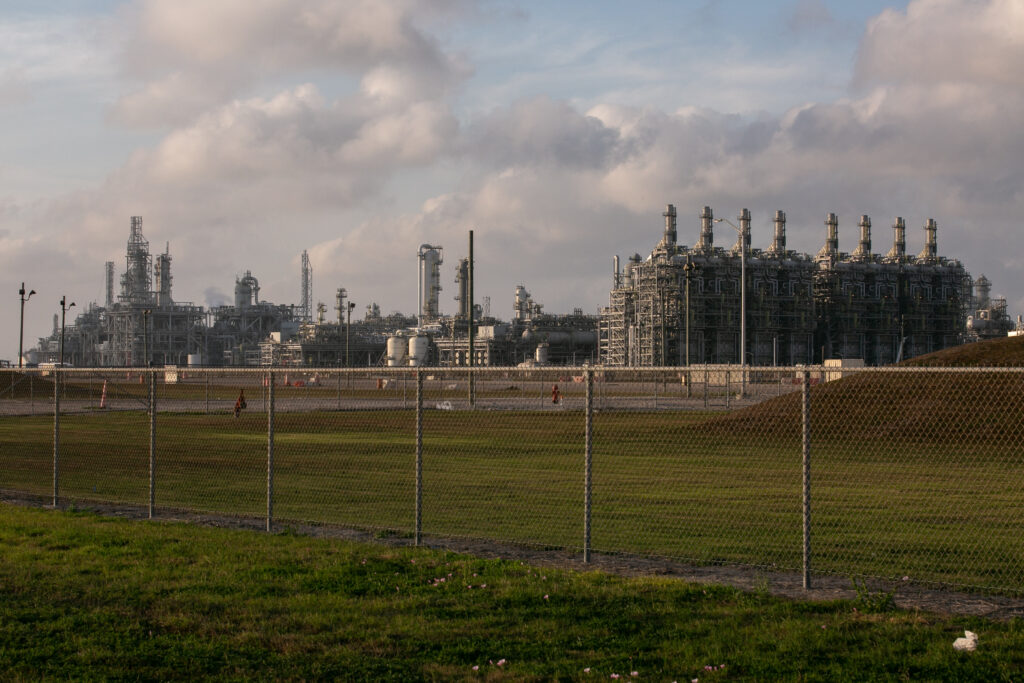
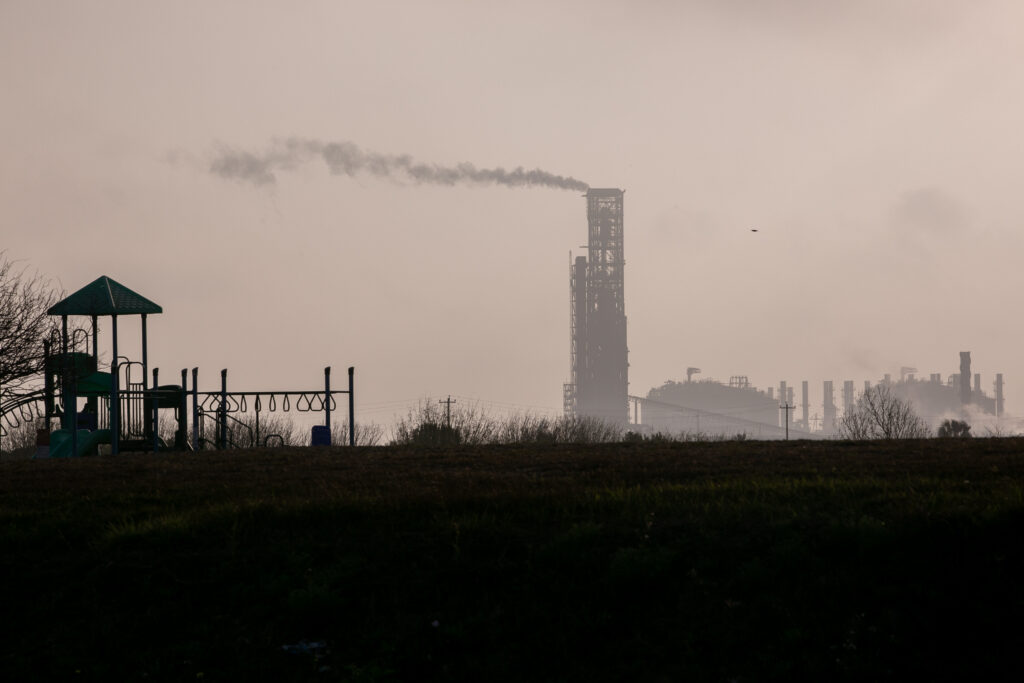
That includes refineries operated by Flint Hills Resources, Valero and Citgo that provide jet fuel to Texas airports and meet much of the state’s daily demand for gasoline.
“This waiting disaster is under the radar for the rest of the state,” said Roach, who worked 20 years at the water district and retired in 2014. “We hear nothing from the Texas politicians about the seriousness of the situation or any state plan to mitigate it.”
He no longer had access to current water data and contracts, he stressed, but produced the report based on his own knowledge. It said the costs of trucking in emergency water “would bankrupt many local small businesses and low-income households” while state emergency managers would need billions of dollars to “build emergency temporary pipelines or subsidize desalination barge rentals to prevent a total evacuation of the city.”
Strawbridge, a former director of the Port of Long Beach, said Roach’s assessment was “spot on.”
Kara Rivas, a spokesperson for Flint Hills Resources, which delivers jet fuel via pipeline from its Corpus Christi refinery to airports in Dallas and Austin, said, “We are doing everything we can to minimize our water use and diversify our water resources to avoid disrupting our operations.”
Flint Hills is developing a project to use treated effluent from a wastewater treatment plant to meet up to 15 percent of its water demand. The refinery consumes about 0.55 barrels of water per barrel of crude oil, Rivas said, a 29 percent reduction since 2010.
“We are focused on working with local authorities on finding ways to meet the region’s immediate and long-term water needs,” she said. “This is a challenge that requires leadership.”