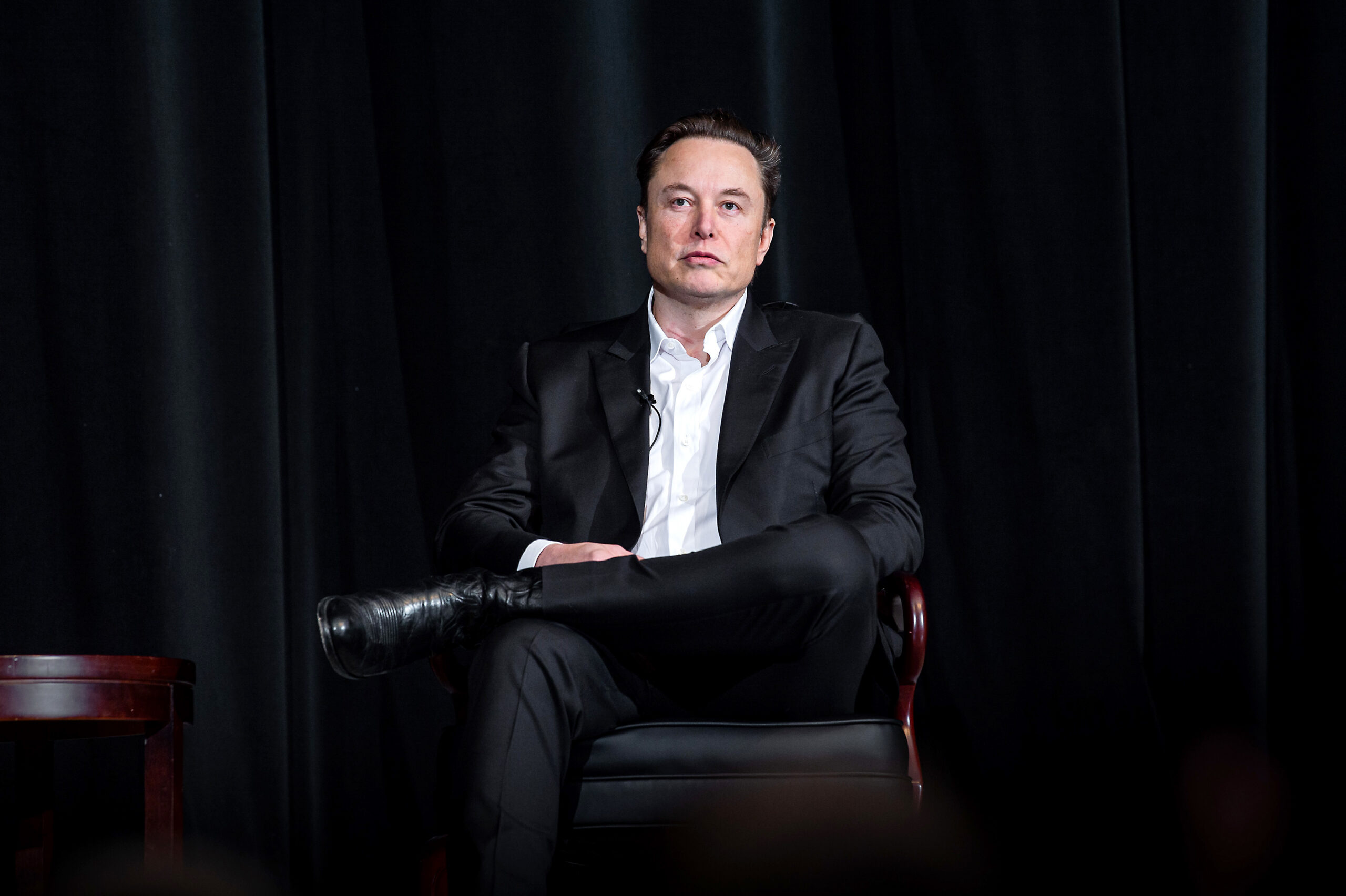
Elon Musk says he intends to create a massive venture to provide the chips needed for the cars, robots and AI data centers his companies plan to build. Much of the work could be done in Austin.
Musk calls the project Terafab, and says it will be the “most epic chip-building exercise in history.” Terafab is expected to cost $20 to $25 billion.
Dave Lammers is a contributing editor at Semiconductor Digest. He says Musk’s plan to vertically integrate the full chipmaking process is unusual. Listen to the interview in the player above or read the transcript below.
This transcript has been edited lightly for clarity:
Texas Standard: Well, why do Elon Musk’s companies need so many chips, and why does he want to build them himself?
David Lammers: I think one of the key phrases of his announcement the other day was when he said that the existing suppliers, Samsung, TSMC, and Micron, are not expanding their capacity at the maximum rate needed by Tesla. So he is happy that he has outside suppliers, but he feels like the quantity and the type of chips that he needs are going to be way more than they can supply.
A lot of the problem with this is that the technology for making a chip, the way the transistor is architected, the materials — they call it the recipe in the semiconductor industry… That is all really closely guarded IP. Samsung, TSMC, Intel, they all have their own secret sauce about how they make chips. And that is changing. You know, every two or three years, they have to come up with some new knob to turn to get to the faster technology that NVIDIA and others are asking for.
So Tesla and his other companies, SpaceX and xAI, don’t have this basic technology. So I think they’ll have to license it or come up with some kind of IP-sharing arrangement with one of the established semiconductor companies.
And then the other thing that’s been going on in the last few years, as we tried to bring manufacturing back to the states, and rightly so, is that there’s a huge manpower shortage. Semiconductor engineers, people that know how to build and operate fabs, it takes a long time for them to learn what they need to know to be a contributor.
So TSMC brought in several hundred Taiwan engineers to Arizona. Samsung has got several hundred Korean engineers here in the Austin area. And not to mention the fact that Samsung has a fab in Austin where they’ve got a couple thousand people and some of those people can transfer up to the new Taylor fab that is expected to make the Tesla chips.
So Musk says his new venture will be vertically integrated, meaning that the chip design, manufacturing, and testing are all under one roof.
Is that unusual in the semiconductor world? And what challenges could that create?
Oh, yeah, it completely goes against the tide of the last 40 years. You know, in 1986, TSMC started the Foundry, which meant that fabulous companies like Qualcomm and Apple and others could design chips and have thousands of design engineers.
And then they would ship it over to Taiwan. They would make it. TSMC would ship it to Malaysia and other places for the packaging and so that disaggregation of the semiconductor industry has really moved at a rapid pace the last 20 years or so.
By trying to integrate everything, Musk has completely gone against the tide of the semiconductor industry for the last 40 years.
» GET MORE NEWS FROM AROUND THE STATE: Sign up for Texas Standard’s weekly newsletters
Well, elaborate a little. How would a successful Terafab change the game for the rest of the semiconductor industry? You mentioned Musk buys a lot of chips from other companies, and he plans to get more from Samsung. And, of course, how would that affect even just the industry in the Austin area?
Yeah, it throws a wrench into Samsung’s plans, I think, because for the last few years, they would openly say, we don’t have a customer for our new Taylor fab. And then along comes Musk and Tesla saying that they were going to make their AI processor at the Samsung fab in Taylor.
I talked to some people in the industry just a few days ago and they said that the fear of an AI bubble is very real and these semiconductor companies don’t want to leave their customers short, but they don’t wanna over-invest either. Musk is saying he’s forced to build the Terafab. And I think that if it works, it’s gonna take at least five years before he gets meaningful quantities of chips.
So you anticipated my next question. Musk says Terafab could begin producing chips by 2027. That’s next year.
Does that sound like a realistic timeline? And does Musk’s tendency to over-promise on his projects cause you any concern?
I think that’s one of the things that is not realistic at all, especially given the things we just talked about — the shortage of expertise within Tesla to build fabs.
What I think he might need to do is prove out his master plan, which is to use his reusable rockets to the starships to go up in space. That’s what I found interesting about his presentation here in Austin last Saturday, was that he said that doing AI processing up in space will take advantage of the fact that the solar power in space is five times what it is here on Earth, and it always shines. You don’t need a battery. And so go up to space and take advantage of the lower cost of energy.
So he says within two years, it’ll be cheaper to do AI processing in space than it will be here on Earth. And if he can demonstrate that with chips that are made by other companies, then I think the enthusiasm for his project will build and people will be attracted to it. Workers and engineers will want to be part of that.