From Houston Public Media:
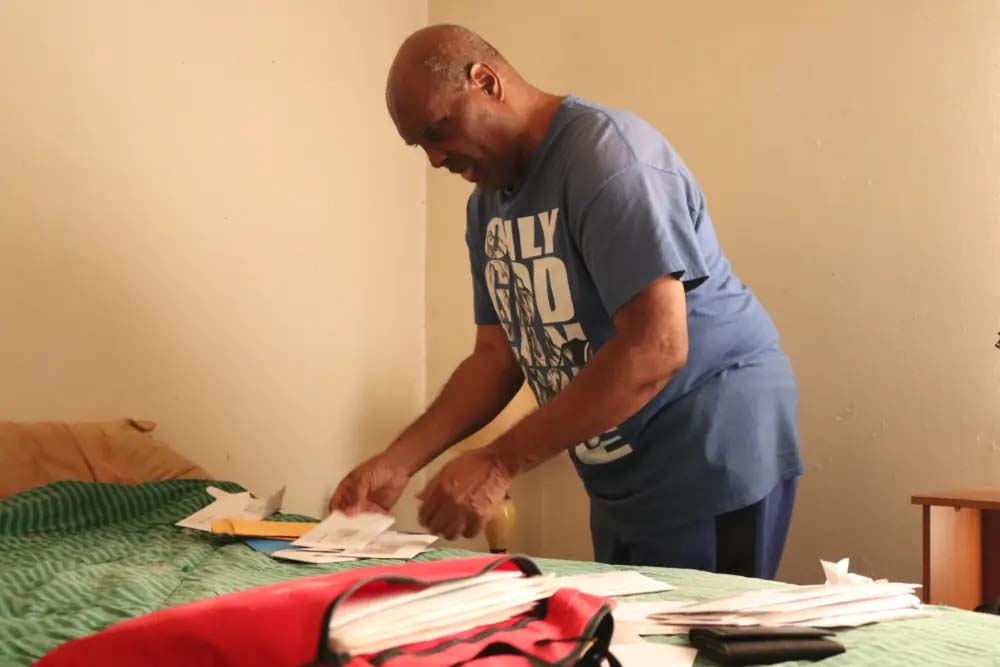
Ronald Demery keeps important letters in a folder in his bedroom.
One of them is from the Texas General Land Office. The state agency administered recovery funds following Hurricane Harvey in 2017, and he had been anxiously waiting for the letter.
He received it in February — more than seven years after Harvey damaged his home in the East Little York Homestead neighborhood in Northeast Houston.
“I thought it was good news, saying they had found me a builder to come do my home,” Demery said. “But then I read down, they said they out of funds. I said, ‘Oh no, not again.'”
Demery was among 30 households whose applications for home repairs were withdrawn because funding ran out. Altogether, more than 3,200 households were deemed ineligible or were withdrawn.
Following Harvey, the City of Houston and the land office sparred over the distribution of more than $720 million in federal recovery funds. After the city rebuilt less than 300 homes within three years, the land office took over the program. Since then, the state agency has rebuilt more than 2,200 homes in the city.
For Demery, the disappointment came after years of back-and-forth with the city and state. The floor and plumbing inside the home is damaged. On the exterior, there are holes in the walls and exposed wires.
“It’s bad. It’s getting worse and worse,” Demery said. “When Harvey came, it was bad. And then when Beryl came, it got worse.”
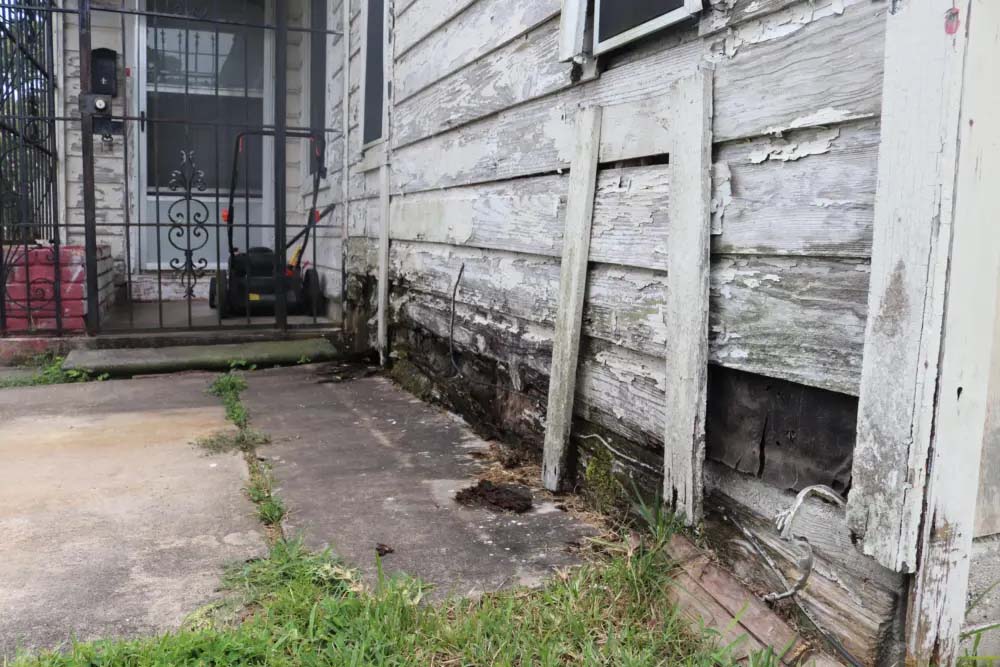
Ronald Demery’s Houston home was damaged by Hurricane Harvey in 2017 and Hurricane Beryl in 2024.
Dominic Anthony Walsh / Houston Public Media
Because Hurricane Beryl last year also damaged his home, there’s a chance he could still get relief.
In August, the Houston City Council voted 12-3 to allocate $100 million — out of $315 in federal funds — toward housing for recovery from Hurricane Beryl and the derecho wind event last year. Half will go to multifamily housing, while the other half goes to single-family homes.
Fred Flickinger was one of three council members who voted against it.
“I think it’s a question about whether or not the money should be used in a manner that benefits everyone in the city or only a group of select individuals,” Flickinger said.
The $100 million for housing came at the expense of a program to install backup power generators at city facilities. That program will still receive just over $100 million. The opposing council members wanted to maintain the original funding level.
Council member Tiffany Thomas spearheaded the shift. She says the resiliency initiative is important, but it has to be balanced with recovery.
“Because we do need to make sure we have immediate local spots — hyperlocal attention in neighborhoods — for charging your oxygen, cell phones, just staying warm or cool,” she said. “And then also, once you leave that public facility, being able to return home and receive funds to stabilize if there’s damage to your homes.”
When it comes to multifamily housing repairs, Joseph Bramante is anxiously awaiting details about eligibility. He’s the CEO of TriArc Real Estate Partners, which owns the Vintage at 18th apartment complex in the Lazybook and Timbergrove area in Northwest Houston.
The derecho and Beryl were “pretty devastating,” Bramante said, knocking out about 60 of the complex’s 372 units. Since then, the company has been mired in an insurance dispute.
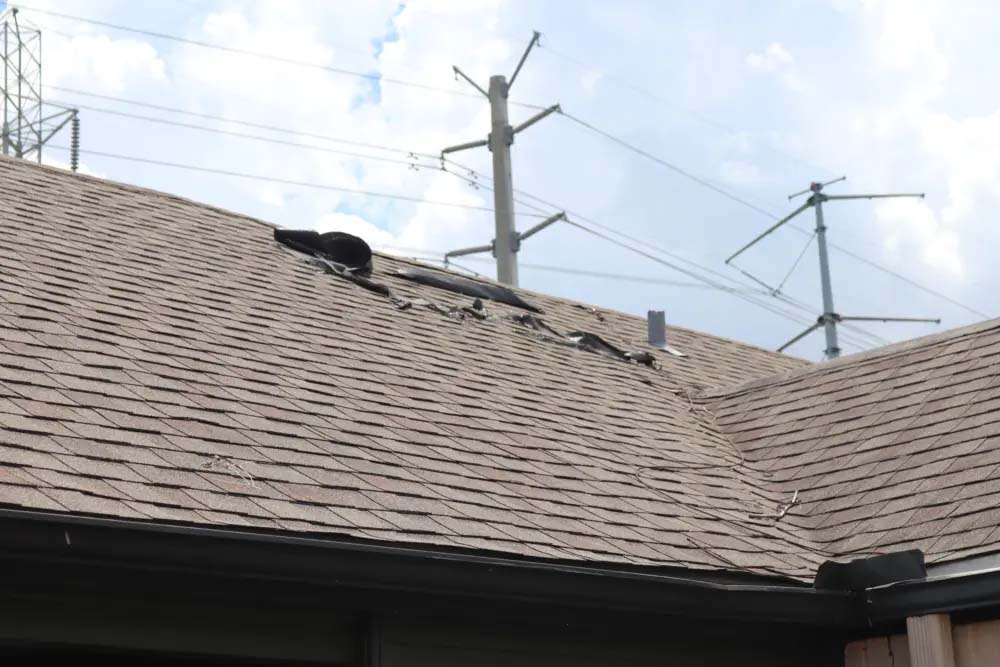
Pictured is storm-related roof damage at the Vintage at 18th apartment complex in Houston.
Dominic Anthony Walsh / Houston Public Media
“There’s a lot of properties like ours that are struggling because of just the back-to-back nature of the two storms,” he said. “Folks like ours are still struggling, and it’s been a year going, and (funding for repairs) is going to definitely help a lot with bringing those units back online and creating some more affordability.”
For the 30 people whose homes weren’t rebuilt after Harvey recovery dollars ran out, the Texas General Land Office said it would be able “to facilitate a transfer of the applications” for them to receive assistance through the new pot of funding.
Even city council members who voted for the funding raised concerns about the quality of repairs, transparency and oversight, and the amount of money allocated toward each individual home.
“I think that the concern of how the money is being spent and how much money is being put into one property is valid,” said Julia Orduña, southeast regional director with the nonprofit advocacy group Texas Housers — one of the groups that pushed for the additional allocation for housing.
The group pointed out the federal government assessed about $229 million in unmet housing needs after the derecho and Beryl. With $100 million on the table, not everyone will get what they need.
“I think that’s where we need to be strategic in the way that we’re doing this,” Orduña said.
Following Harvey, the city allocated nearly $630 million in federal funding toward housing programs. Harvey damaged more than 200,000 housing units, and less than 4,000 single-family homes were rebuilt. The majority of them were torn down and reconstructed, according to the land office, which set the maximum threshold of rehabilitating repairs at $65,000 for most properties.
Following the storms last year, the federal government found there were nearly 4,000 homes with “serious unmet housing needs.” The city has not yet set an “over-under” dollar figure that will decide whether a home is repaired or torn down and rebuilt.
“If we are concerned with the repairs of the house and catering to each community member’s needs, then we need to address those needs as they come, and not just try and tear down houses and build them as fast as possible — because that’s ultimately where the money is being spent,” Orduña said.
The U.S. Department of Housing and Urban Development has about 45 days to approve the city’s spending plan, and the city’s housing department said it expects money to start flowing by early next year.