In a city with a size and history of Houston, music is a big part of the story. The music of Houston is certainly known far and wide – from country, to Americana, to blues and R&B and southern hip-hop, especially when it’s chopped and screwed.
But when you think of zydeco, does Houston immediately come to mind?
You’d be forgiven if you first thought of Louisiana, especially as zydeco music can be as rich and spicy as gumbo itself. If you go someplace like Lafayette, La., you’ll hear some of the best zydeco in the world.
But less well-known is Houston’s place in the origin story of zydeco.
For years, musicologist Roger Wood traveled the back roads that bridge Lafeyette and Houston, eventually writing a book on the subject called “Texas Zydeco.” Roger Wood is a musicologist who’s based in Houston. He joined the Standard to talk about those musical roots. Listen to the interview above or read the transcript below.
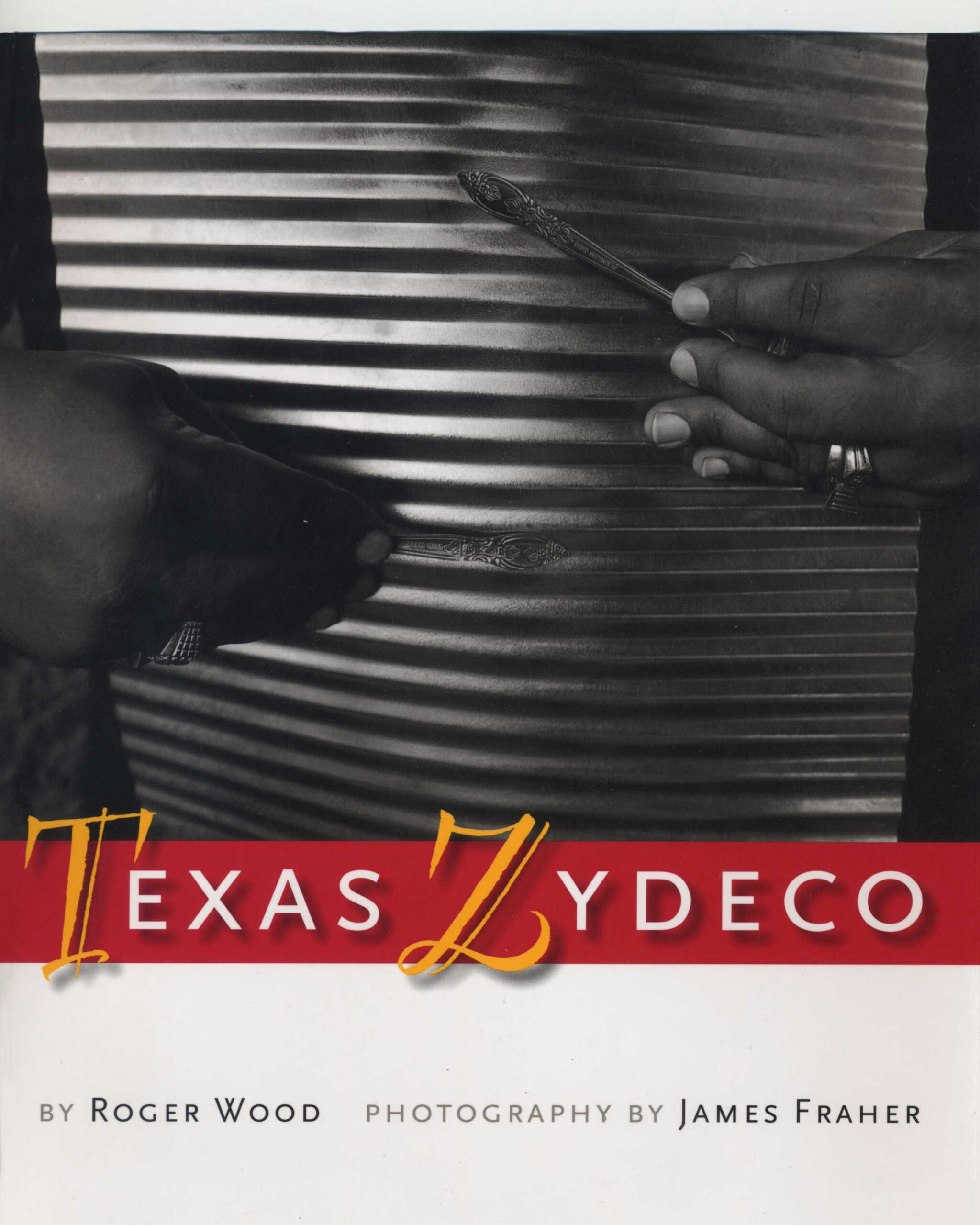
Courtesy of University of Texas Press
This transcript has been edited lightly for clarity:
Texas Standard: Well, before we go much further, I have to say I was surprised to learn that as folk music traditions go, zydeco is a relatively new genre of American music. It goes, in some respects, back to the end of World War II, depending on how you measure it.
Roger Wood: Yeah, you know, the predecessor of zydeco was a Creole folk idiom, mainly called la la, which was mainly just accordion and some home percussion and maybe someone had a fiddle.
And that music wasn’t really played in public venues. It certainly wasn’t played at nightclubs, festivals, and it wasn’t popularly recorded until after World War II, which corresponded with a time where a lot of the sharecropper Black Creoles from southwest Louisiana were migrating toward jobs, and particularly Houston.
The ship channel industry, the petrochemical industry, all of that stuff attracted these migrants who brought their folk idiom with them and moved into a part of Fifth Ward originally that was called French Town. And there they were exposed to lots of direct influences from regular Texas. Black, early R&B and blues.
That’s what happens. It’s like Louisiana is the roots and then Houston and southeast Texas is kind of the urban hothouse where those young plants fully flower into a modern idiom.
And once those acoustic folk instruments added in electric guitar, standard drum, electric bass, along with the scrub board and the accordion, they really developed a sound that became what we think of today as zydeco.
» GET MORE NEWS FROM AROUND THE STATE: Sign up for Texas Standard’s weekly newsletters
Let me ask you about something because this may be an apocryphal story but as I’ve heard it: the term “zydeco” comes as a kind of corruption of a title of a French song, “Les haricots…”?
Well, it’s actually an old Creole folk expression. It’s Les haricots sont pas salés, which “Les haricots” is, my pronunciation of French, means “the beans,” “sont pas salés” – “are not salty.”
And it was an old Creole folk expression that found its way into song. And it was used not just as a song lyric, but as it became kind of a malleable word. The dancing that was done to the music was referred to as “le zarico,” the music itself was called “le zarico,” the event where the music was staged was called “le zarico” as they shortened the expression.
And because Creole French was mainly a spoken idiom, not a written idiom, no one really knew precisely how to spell it, certainly not in the standard French way. And so they were spelling it phonetically.
And we’ve documented, not just I, but many people have documented, just multiple variant spellings of this word, “le zarico.” And eventually it becomes le zydeco, Z-Y-D-E-C-O, thanks to a Houstonian – the esteemed and controversial folklorist Mack McCormick is the one who established that orthography in 1959 in the extensive liner notes he wrote to some field recordings he had published in England.
And a few years later, when Chris Strachwitz, the founder of Arhoolie Records, was in Houston recording the guy who would become known as the King of Zydeco, Clifton Chenier. He recorded Clifton playing a song that says, “Zydeco Sont Pas Salés,” and Stratwich thought, “how do I spell that?” And he followed Max’s lead.
Speaker 4: We gotta play all the music what’s happening on home right now, they call it the Sadeco. This is a little song they call, Zareko e Pasa Le. This is, no salt in your snap beans.
But, you know, when I moved to Houston in ’81, I still saw variant spellings as recently as the 1980s, but eventually the Z-Y-D-E-C-O spelling that Max McCormick came up with became the standard. I see.