For 30 years, the Texas Civil Right Project has worked to advocate for voting rights, disability rights, racial and economic justice and more.
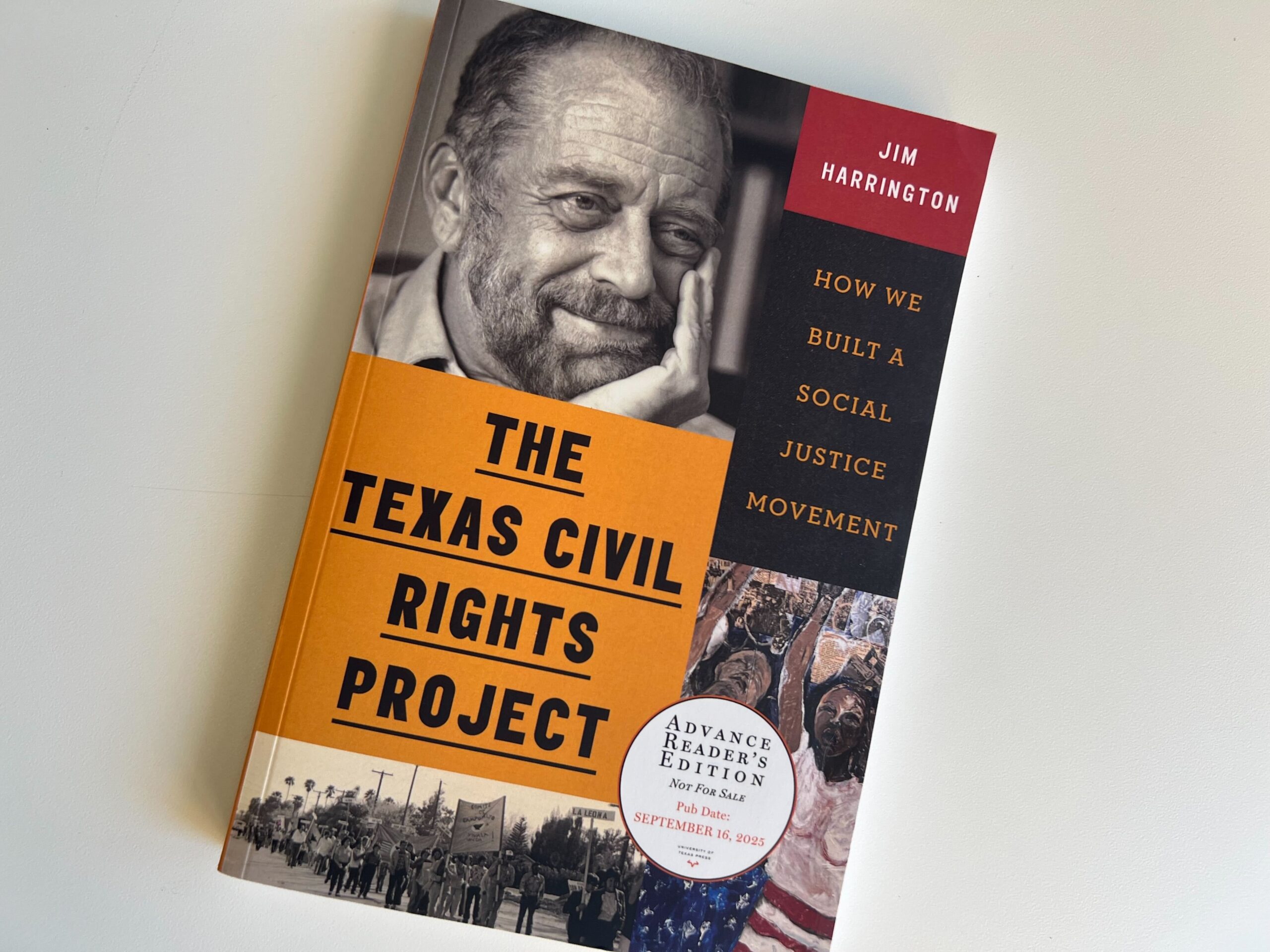
It was founded by attorney Jim Harrington who represented César Chávez in Texas and worked alongside him fighting for the rights of farmworkers for years. Now, a new book tells the story of how it all came to be entitled “The Texas Civil Rights Project: How We Built a Social Justice Movement.”
Harrington spoke to the Texas Standard on where his sense of justice comes from and the founding of the organization. Listen to the interview above or read the transcript below.
This transcript has been edited lightly for clarity:
Texas Standard: It’s been a long time, I think, that when you announced that you were leaving the Texas Civil Rights Project – must have been about ten years ago, by my reckoning – a lot of people were, I don’t want to say distraught, but it sure felt like that to me when I was listening to the reactions.
At the time you said you’re not quitting the cause, you are just changing horses. How’s it been in those ten years?
Jim Harrington: Well, the horse has been as much of a bronco as it was before I retired, let me tell you. So I have been really, really busy and still doing a lot of legal stuff, working with the immigrant community and other things that come up. People don’t get paid, so I’m very busy.
Well, let me ask you, why did you want to put together this story here? I mean, put it all together in a broad overview of you and the launch of the Texas Civil Rights Project. What were you hoping to do with the book?
Well, first of all, I got talked into it. I resisted this for a while, you know? And then I thought, well, what I oughta do is this is a time to pay tribute to the people that I worked with and to tell their stories and to memorialize the struggles that they all went through and the lucky part of it that I got to play in it.
And then then I got, you know, my editor made me tell more stories about myself, that kind of stuff. But the real purpose that I had in mind was to honor all of the people that I had the good fortune of working with over all those years at TCRP.
I was surprised to hear, I guess someone had told me this in the past, but that you, what, initially wanted to be a priest, but you became a lawyer? You got to connect the dots for me there.
Yeah, that’s my story. It’s really fascinating how things fall into place.
So I was studying to be a priest back in the days when you could do this as high school, you know, and then I went into college at the seminary, eight years. And it was a fluke. I ended up being assigned to take Spanish and that brought me to working with migrants in Michigan, that was where I was.
And we used to have like, in the whole state, maybe as many as 200,000 migrants from Texas would come in. In the area I worked in, there were 25 to 30,000 coming in from the Valley.
It sort of came to my mind – some of this is subconscious, I think – that I couldn’t do what I wanted to do being in the clergy at that time, and I had this really crazy experience. I used to get up and watch “Underdog” on Saturday mornings – the old days, the old “Underdog,” the original “Underdog.”
“There’s no need to fear, Underdog is here!”
Exactly, you got it. And that morning I just sat up in bed and said “you need to be a lawyer” and so that’s what I did, because I knew that I wanted to end up in South Texas working with the farmworking folks down there and that’s when I did.
What about forming the Texas Civil Rights Project? Was that part of the game plan or did that sort of happen organically?
So it happened organically. You know, I actually had moved to Austin to work with the Texas Civil Liberties Union. And we had some disagreements about the way we would do litigation, that kind of stuff.
And so I went off on my own and started the Texas Civil Rights Project because I wanted to be totally community-based. The cases that we were doing, I wanted it to come out of the community and support the community. And sometimes when you’re doing ACLU cases, you’re kind of doing stuff on your own, you know, because of the principal.
It’s valuable work, there’s no doubt about it. But that wasn’t where I felt my mission was. And so I started the Texas Civil Rights Project. And by the time I retired, we had six offices and 40 staff, two offices on the border – one in El Paso and one in San Juan down by McAllen.
When you think back on the work of the TCRP, when you were there, what stood out to you as like maybe one of the most important victories? I mean, there are always unique situations, but I’m curious, was there something that you sort of are especially proud of in your work with the TCRP?
So I have a triple answer for that, because I’ve thought about this a lot.
First of all, was extending all of that protective legislation that workers generally have to farmworkers. Workers’ comp if you get hurt. Unemployment comp when you’re unemployed. The right to know about use of pesticides in the workplace. All of those benefits, those protections that all other workers have that farmworkers did not have.
And so I think extending that, doing the litigation and the organizing the legislation… If the only thing I ever did as a lawyer was that, that, to me, would be worth it.
I think the other thing, the other two cases are extremely important. One was establishing privacy as a fundamental right under our state constitution. We banned polygraphs for public employees and the federal constitution does not have a right of privacy. So we actually expanded civil rights protections in Texas under our own state constitution
And the third one was suing the Texas Supreme Court that it wasn’t doing enough for people who could not afford attorneys. And the result of that was the creation of the Texas Access to Justice Foundation, which now helps fund legal aid programs for the poor.
So I think those are the major things that I’m really, really happy that I had the opportunity to do.
Are you optimistic about the future of the TCRP and about the struggle as you’ve seen it?
One of the things that is happening with nonprofit organizations is they’re losing their sense, they’re not developing their sense of what Bryan Stevenson calls “proximity.”
For me, I think the key thing is living in the community, working with the community and helping the community in the struggles that it identifies. You know, not to sit in the office and waiting for someone to show up, but getting out there and doing that kind of grunt work. Grunt work in the sense that if you’re looking for a nice office, but if you want to really help people, you’ve got to step outside and get involved in the community.
I know one of the first things I did when I went to South Texas, I worked out of the United Farm Workers office, and I remember spending Saturdays – they had eight acres of corn. Going over and helping husk that corn was awful work. It was hot and dirty and all that, but that was one of the ways of establishing your cred with the people when they see you out there doing stuff with them and that you don’t have this elitist sense of being a lawyer.
I mean, that’s what we have to recover, I think – you know, we who are working for justice.
“The Texas Civil Rights Project: How We Built a Social Justice Movement” will be featured at the Texas Book Festival in Austin during the weekend of Nov. 8-9.