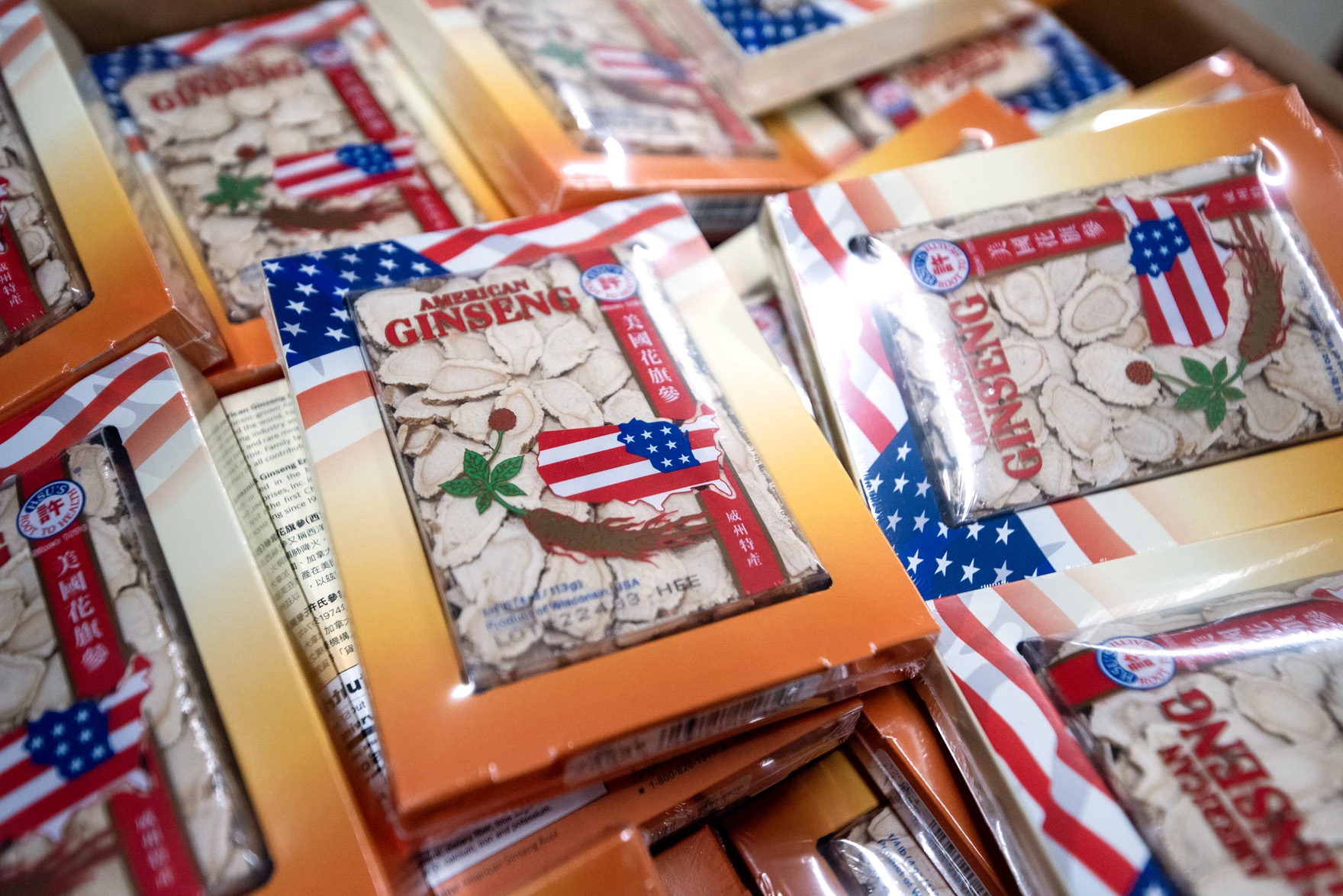
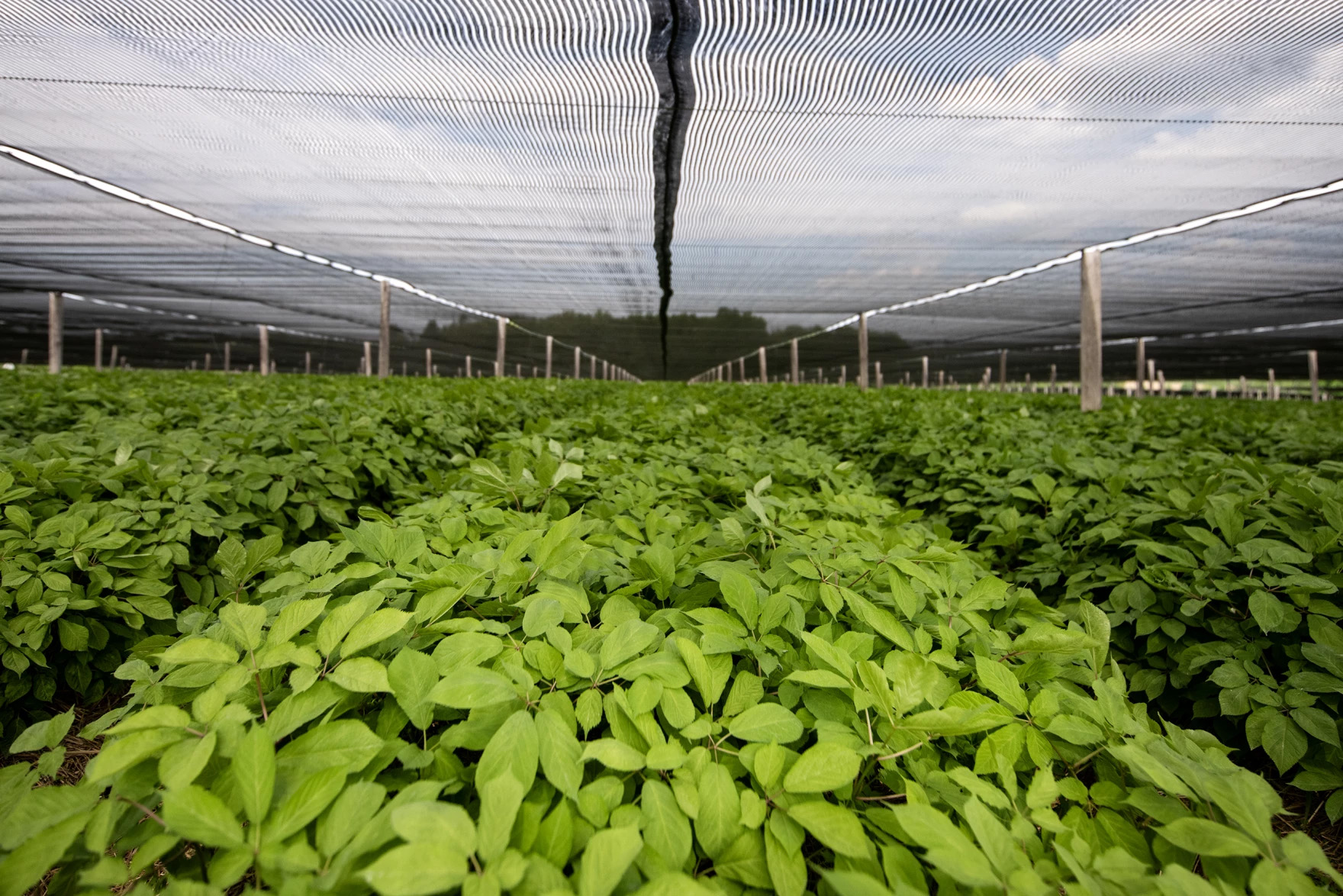
In a warehouse north of Wausau, Wisconsin, thousands of cardboard boxes full of dried ginseng are stacked and waiting at Hsu’s Ginseng Enterprises.
It’s one of the largest growers of the specialty crop in Wisconsin, where almost all U.S. ginseng is grown. Will Hsu, the company’s president, said there’s something special about the region’s soil and the climate, what the French call “terroir.”
“Customers over the last 100 some years have gotten used to this taste and flavor, probably no different than wine connoisseurs feel about Napa Valley or France,” he said.
American ginseng is a staple of Chinese medicine, offering a cooling or tonifying effect that contrasts the more fiery ginseng native to Asia. The slightly bitter, herbal-tasting roots are mostly sold dried, but can also be processed into powders and teas.
Hsu sells about half of his annual crop directly from the U.S., offering direct-to-consumer sales online, through duty-free shops at airports or through Chinese pharmacies and grocery stores.
The other half is exported to processors in Asia, mostly in mainland China, Taiwan and Hong Kong. But these sales have largely been put on hold this year due to the back and forth exchange of retaliatory tariffs started shortly after President Donald Trump took office.