Here are the stories on Texas Standard for Thursday, Sept. 25, 2025:
July 4 flooding response may have been hampered by FEMA head’s inaccessibility
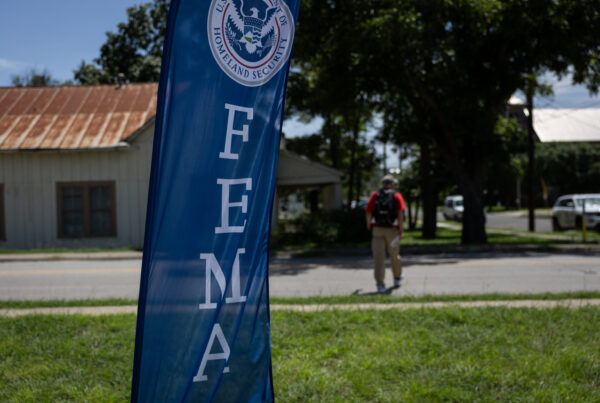
Key staff at FEMA say that the agency’s head, David Richardson, is often inaccessible – even amid disasters like the July 4 flooding in Central Texas – according to a new report from the Washington Post. The report says local teams working the disaster response were hampered in accessing resources needed by the communication roadblock.
Brianna Sacks has the exclusive story for the Washington Post, where she covers climate change and natural disasters. She joins us today.
How much Texas universities stand to lose with HSI grant cuts
Texas colleges and universities were expecting nearly $60 million in grants for Hispanic-Serving Institutions by the end of this month. Then, the U.S. Department of Education abruptly announced it would not distribute the funding.
According to our partner station Texas Public Radio in San Antonio, Texas received 98 grants worth a combined $57.7 million last year. Camille Phillips, who covers education for TPR, joins us to break it all down.
Afghans who aided US in conflict now caught in immigration crackdown
When the U.S. fought a 20-year war in Afghanistan, thousands of Afghans fought alongside them. They served as interpreters, engineers, and in other roles – and they now face the threat of retribution from the Taliban. The U.S. promised to help many of those Afghans come to America, but some are now caught up in President Trump’s immigration crackdown.
Andrew Dyer reports for the American Homefront Project.
Windphones look to reconnect us with lost loved ones
When a loved one dies, it’s common to wish for just one more chance to talk with them. The solution may lie in a disconnected rotary phone: Windphones are popping up across the U.S. and aim to give the grieving another opportunity to speak with those they’ve lost.
KERA arts reporter Marcheta Fornoff visited a windphone in Arlington and brings us this report.
How would the Trump TikTok plan work?
The Trump administration has a plan to save TikTok in the U.S. Part of it would mean data gathered in the U.S. would be kept in the U.S. on U.S.-based servers. That plan is designed to mollify members of Congress concerned that the sensitive data of U.S. TikTok-users is being passed along to China.
If this goes through, who will be making decisions about the platform? And will users be forced to download a new app? Tech expert Omar Gallaga has been looking into the issues for CNET and joins the Standard to discuss.
Where does Mexican food end and Tex-Mex begin?
In the U.S., the mix of immigrant cultures has led to a burst of fusion cuisine. But the most popular – and possibly first to get its name from the mix of cultures – comes from the blend of Texas and Mexico: good ole Tex-Mex.
But as taco journalist and host of the Tacos of Texas podcast Mando Rayo points out, there is a distinct line that marks the difference between where Mexican food ends and Tex-Mex begins.
Where things stand amid new lawsuit against state’s Ten Commandments law
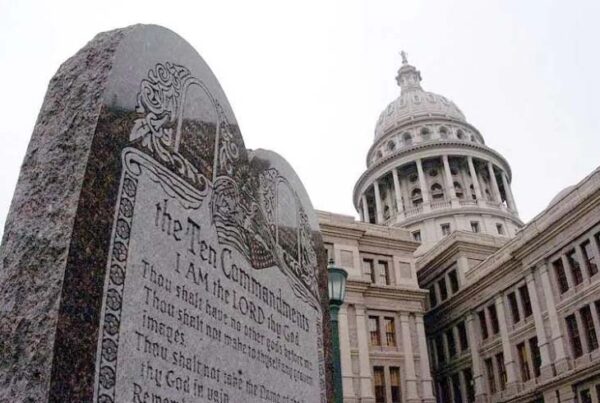
This summer, Gov. Greg Abbott signed a bill into law requiring that all public school classrooms in Texas display the Ten Commandments.
The American Civil Liberties Union of Texas and a group of religious freedom organizations filed a lawsuit in response to the bill’s passage and in August a federal judge blocked the law from taking effect in a number of districts around the state. Then, Attorney General Ken Paxton appealed the ruling and ordered school districts not tied up in the litigation to obey the new law for the time being.
How all of this will shake out still remains to be seen, but on Monday, a group of 15 families filed another lawsuit in a San Antonio court pulling even more districts into the legal battle. Jacob Sanchez, education editor for the Fort Worth Report, joins us with the latest.